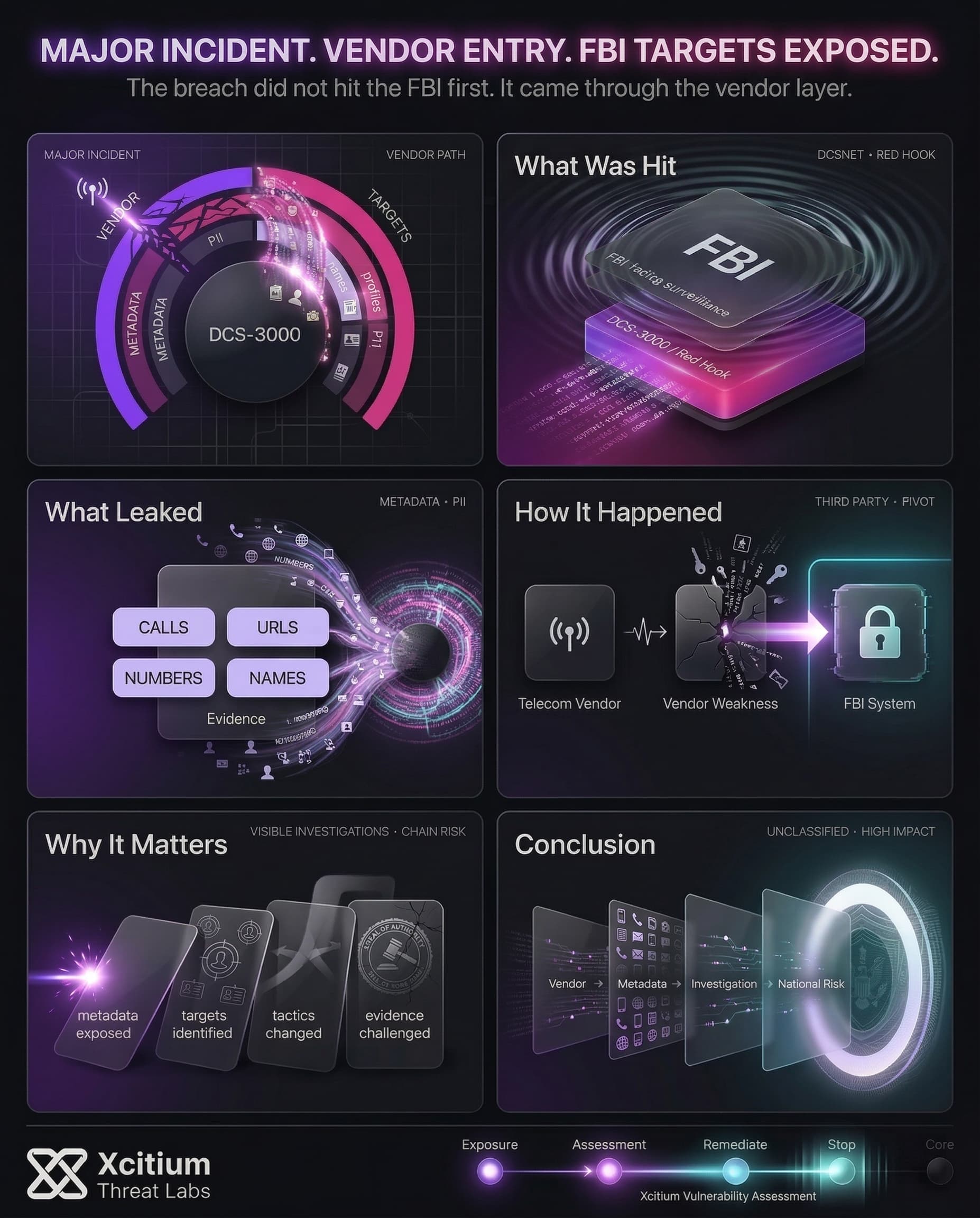
Recently, it was officially reported by the FBI that their internal wiretap network was breached through a cyberattack and labeled as a major incident under federal law. The inquiry was initiated due to the unusual activities in mid-February which led to notification to the Congress by early March.
The FISMA Act classifies the breach as such if there is a high risk involved in compromising the nation’s security. There are several reports that the attackers are associated with China; however, no group was officially reported by the FBI to be behind this incident.
What Data Was Compromised
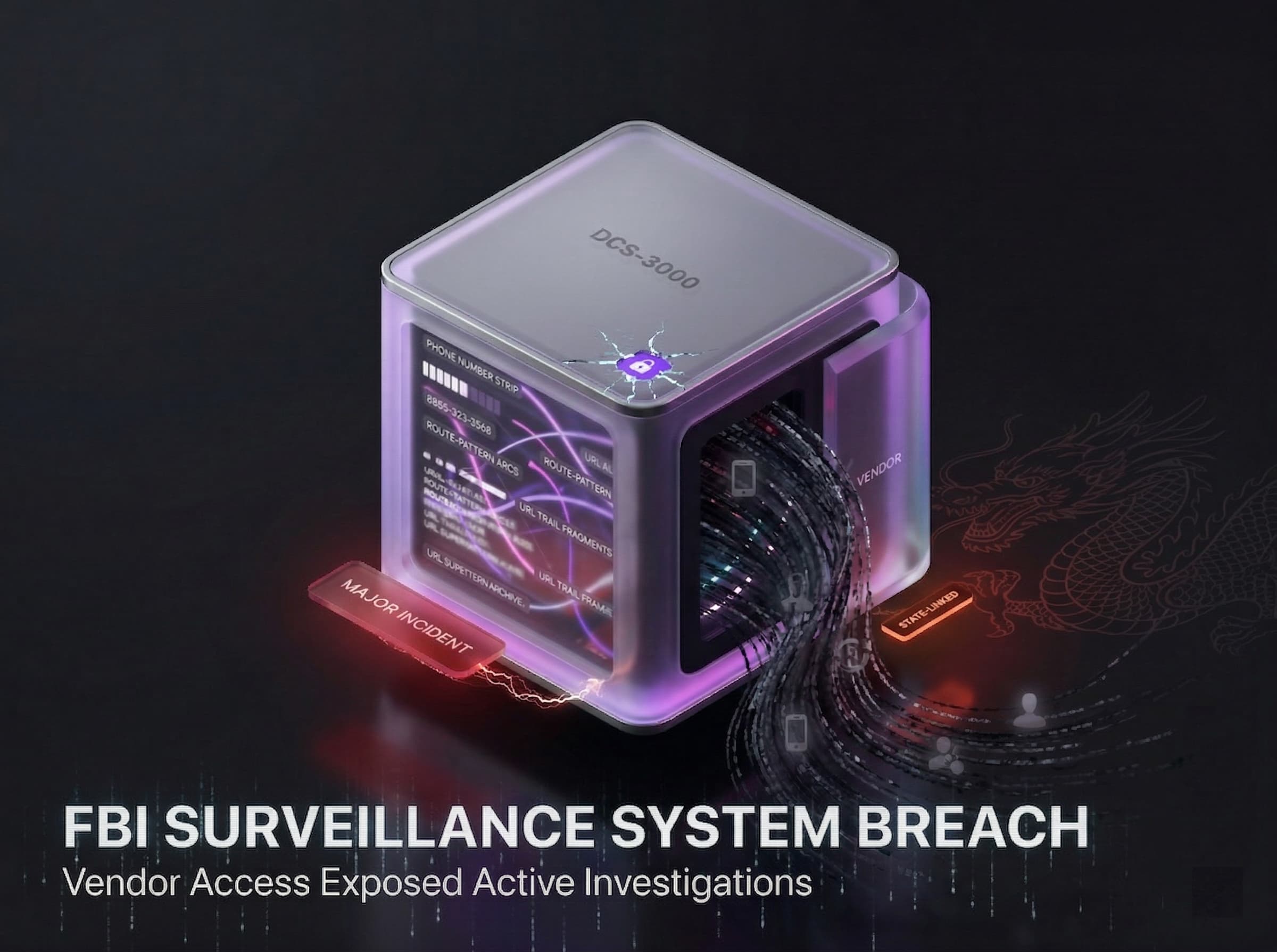
The criminals had access to an unclassified section of the Digital Collection System Network (DCSNet), namely, the DCS-3000 module (called “Red Hook“). The DCSNet system deals with the management of the FBI-authorized wiretaps and foreign surveillance requests. Most importantly, the data stored in the network includes both the metadata on the operations with pen registers and trap-and-trace devices (the data on logging numbers dialed, call patterns, and websites accessed) as well as PII data on individuals currently investigated by the FBI.
While the actual conversation between the individuals whose calls are monitored by the FBI is not stored, the released data is enough for the opponents to find out what exactly the Federal agency was looking for. In particular, the phone numbers of the targets monitored by the FBI were included in the list of compromised data.
- The metadata on the use of pen registers and trap-and-trace devices: Call metadata (numbers dialed, route, URLs).
- Personal details on the targets under FBI investigation: PII included in the surveillance system.
- Metadata on the monitoring operations: The names of the persons investigated by U.S. agents.
A leak of any kind may be very problematic. For example, using such metadata, the opponents can understand what investigations the FBI carries out at present, or which foreign agents need to be contacted. At the same time, legal scholars emphasize that such data leakage may question the validity of surveillance authorization and logs.
How the Attack Happened
However, the intrusion was caused by the exploitation of a weakness in the network of an external telecom vendor, not by any direct assault on the FBI’s primary network infrastructure. In essence, they “exploited a commercial Internet Service Provider’s vendor infrastructure to gain access to the FBI’s wiretap network.” This trend is becoming more apparent as complex threat actors become more interested in utilizing supply chains and third parties as vectors.
As soon as the FBI declared the incident a major incident, all federal cyber incident procedures were initiated. The Department of Justice officials promptly established a working group to improve cyber capabilities within their agencies. Congress was fully briefed on the incident, and all law enforcement agencies in the nation remain on high alert. According to a spokesman for the FBI, the incident was confirmed, but only suspicious activities were mitigated through all technological means necessary.
Suspected Actors and Context
Though the FBI has not come out to explicitly accuse anyone of the hacking activity, several sources mention that state sponsored Chinese hackers were behind the attack. Indeed, the method involved in the crime, whereby telecom network infrastructure is used as the gateway into an organization, is quite similar to those of previous attacks made by Chinese hackers. One such hacker group is known as “Salt Typhoon.” In its previous attacks, Salt Typhoon hacked U.S. telecom companies, such as AT&T and Verizon, stealing call records and even breaking into FBI interception systems. Though the FBI has not specifically accused Salt Typhoon of this recent attack, many people see some clear similarities in the two cases.
This hacking attack on the FBI takes place amidst a string of attacks that target government agencies. As a matter of fact, a few months ago, Iranian hackers gained access to the personal email account of the FBI director. On another occasion, Chinese hackers (Volt Typhoon and Salt Typhoon) hacked into U.S. critical infrastructures. Salt Typhoon alone reportedly attacked numerous U.S. companies during the course of 2024. In other words, U.S. security agencies are not excluded from such crimes as well.
Implications and Takeaways
These vulnerabilities are significant because they illustrate:
- Target exposure and investigation: Through accessing call logs and metadata, it became possible to know who the FBI was targeting and with whom. In cases of sensitive investigations, there is always a possibility that an adversary might change their tactics to avoid prosecution.
- Evidence collection and risks: There is always a possibility that evidence obtained from the compromised system can be challenged due to issues of chain-of-custody and admissibility in court. If the data was somehow tampered with or leaked, it would complicate the process of defending evidence.
- Vendor risk management: Using an external vendor or network provider opened up another channel of intrusion that had to be secured.
- Increased policy and oversight pressure: The designation of this case as a “major incident” resulted in heightened attention to the topic among lawmakers. There is a high chance that Congress will examine the overall readiness of the federal government to combat cyber intrusions.
Conclusion: When Metadata Leaks, Investigations Become Visible
The FBI wiretap network breach shows how damaging “unclassified” access can be. Attackers reached the DCSNet DCS-3000 module and accessed surveillance metadata and PII tied to active investigations. Even without recorded conversations, call patterns, numbers, URLs, and target identifiers are enough to expose what an agency is looking for and who it is looking at.
Why This Threat Matters
This incident was labeled a major incident under federal law, and it highlights a modern espionage reality. The most sensitive systems are often reached indirectly, through vendors.
Why Organizations Are Vulnerable
The breach did not require direct access to the FBI’s primary infrastructure. It used an external telecom vendor as the gateway, proving how supply chain access becomes operational access.
- Vendor infrastructure expands the attack surface beyond internal controls
- Metadata reveals intent, targets, and investigative focus
- Evidence chain risks rise if systems are questioned for integrity and custody
Where Xcitium Changes the Outcome
For organizations using Xcitium Vulnerability Assessment, this kind of exposure should be visible before it becomes a breach.
- High-risk vendor-facing infrastructure weaknesses are surfaced earlier
- Remediation is prioritized before adversaries exploit indirect access paths
- Third-party exposure stops being a blind spot, and becomes a manageable risk
If you have Xcitium in place, this attack would NOT succeed the same way, because the indirect entry point is identified and closed before attackers can pivot into sensitive systems.
Secure the Vendor Layer Like a National Asset
This case reinforces a simple rule. Zero trust must extend through vendors, not stop at the firewall. Reduce third-party exposure, monitor continuously, and treat indirect access as your primary risk.