Unpacking the Vercel Security Incident
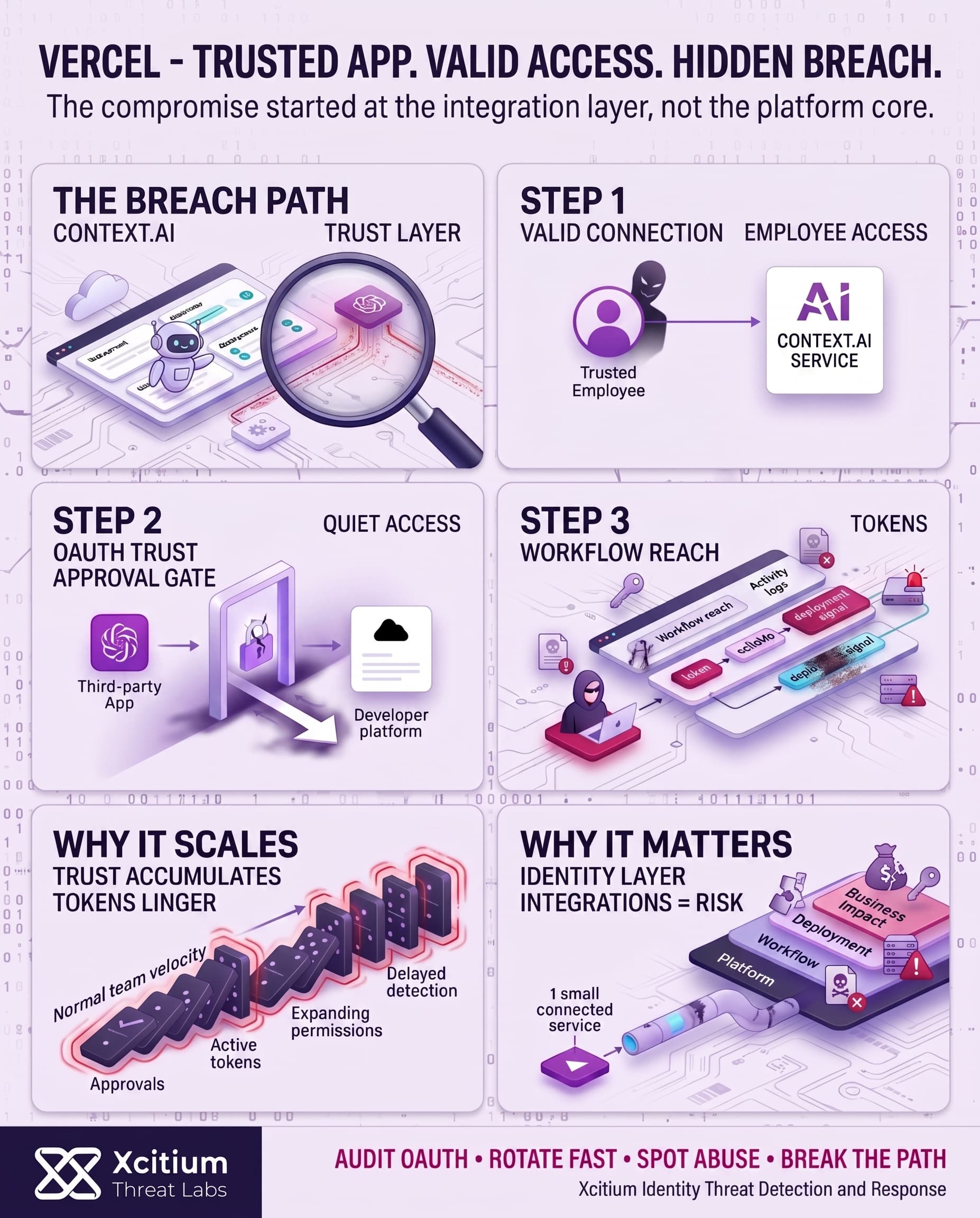
The event that took place on 19th April 2026 was caused by the utilization of an innovative method for attacking. The fact is that there was a breach because of the exploitation of some external AI software known as Context.ai. It is important to note that there was an employee who had access to the mentioned AI software.
Vercel quickly launched an investigation into the issue by involving professionals from incident response teams and the law enforcement agencies. It was confirmed that sensitive environment variables were indeed secure. The reason being, sensitive environment variables are highly secure; hence they cannot be accessed without authorization. Vercel’s services continued running uninterrupted despite the data breach affecting only a certain percentage of its users.
The Ripple Effect: Impact and Community Concerns
The direct effect of the security compromise only applied to a select few Vercel users who were impacted by the stolen credentials. The company responded quickly and proactively reached out to the users and informed them of the urgent need to change their credentials.
In some reports, ShinyHunters claimed to have put up for sale customer information, source code, databases, and access keys. While Vercel had no independent means of verifying these statements, they definitely increased the importance of the situation.
Lessons Learned: Strengthening Your Security Posture
The aforementioned case proves the continued need for implementation of efficient security policies.
- Continuous Inspection of Activity Logs: Continuous monitoring of account and environment activity logs helps in identifying any unusual or suspicious behavior in terms of security breaches.
- Rotate Non-Secret Environment Variables: It is recommended to treat all non-secret environment variables containing some secret information, for example, API keys, tokens, and database credentials as exposed. Hence, rotating them on regular basis becomes imperative.
- Use Protection Features for Sensitive Variables: Always use protection features for sensitive environment variables to make sure that these variables are stored securely and can only be read by a limited number of individuals.
- Check Deployments for Unexpected Signs: Constant inspection of recent deployments should always be done to identify any anomalies in recent deployments. All suspicious deployments must be removed as quickly as possible.
- Deployment Protection Setup: Make sure that the level of Deployment Protection setup is not lower than standard. The purpose is to enhance the security of deployments.
- Token Rotation of Protection: If there is any deployment protection token that has been used then make sure that token rotation is performed regularly.
This case has also pointed out that there exist inherent risks associated with third-party OAuth apps and using long-term secrets. There have been quite a few specialists who advocate taking up a different approach regarding the management of secrets by moving away from using static environment variables. Such an approach would help reduce attack surfaces significantly.
The Broader Implications for the Tech Ecosystem
The infiltration of an apparently harmless third-party service can have far-reaching implications that could affect many different entities. Thus, this event shows that a thorough security audit of all services incorporated into a system is crucial.
Another critical lesson learned from this case is the importance of implementing strict identity and access control measures, especially for Google Workspace accounts and OAuth application permissions. In particular, the administrators of Google Workspace should review the logs of OAuth/ application permissions to verify the scope and the IP address from which the permissions were obtained.
Conclusion: When a Trusted Integration Becomes the Breach Path
The Vercel incident is a clear reminder that modern cloud compromise does not always begin with malware or infrastructure failure. Sometimes it begins with a trusted third-party application, a valid employee connection, and permissions that seem routine until they are abused. In this case, one external AI service became the path into a developer platform used across the modern web stack.
Why This Threat Matters
This kind of breach is dangerous because it targets the trust layer around the platform, not only the platform itself.
- Third-party OAuth applications can inherit real business access
- Long-lived secrets and non-secret variables can still expose sensitive operations
- Stolen credentials can quietly affect deployments, logs, and connected workflows
- A limited breach can still trigger ecosystem-wide concern when source code, keys, or customer data are suspected to be in scope
Why Developer Environments Stay Exposed
Cloud development stacks move fast, and trust accumulates silently.
Teams approve integrations.
Tokens remain active longer than they should.
Permissions expand over time.
By the time suspicious activity is noticed, the attacker may already be operating inside legitimate workflows.
Where Xcitium Changes the Outcome
If you have Xcitium, this attack would NOT succeed the same way.
With Xcitium Identity Threat Detection and Response in place:
- Risky OAuth behavior and abnormal identity activity are surfaced earlier
- Suspicious access patterns can be detected before they turn into broader compromise
- Illegitimate use of trusted sessions loses the quiet advantage attackers rely on
The breach path breaks at the identity layer, before a third-party integration becomes a business-wide problem.
Secure the Integrations That Developers Trust Every Day
The lesson from Vercel is bigger than one incident. Every connected service becomes part of your security boundary. Audit OAuth permissions continuously, rotate exposed tokens fast, and treat identity-linked integrations as critical infrastructure.