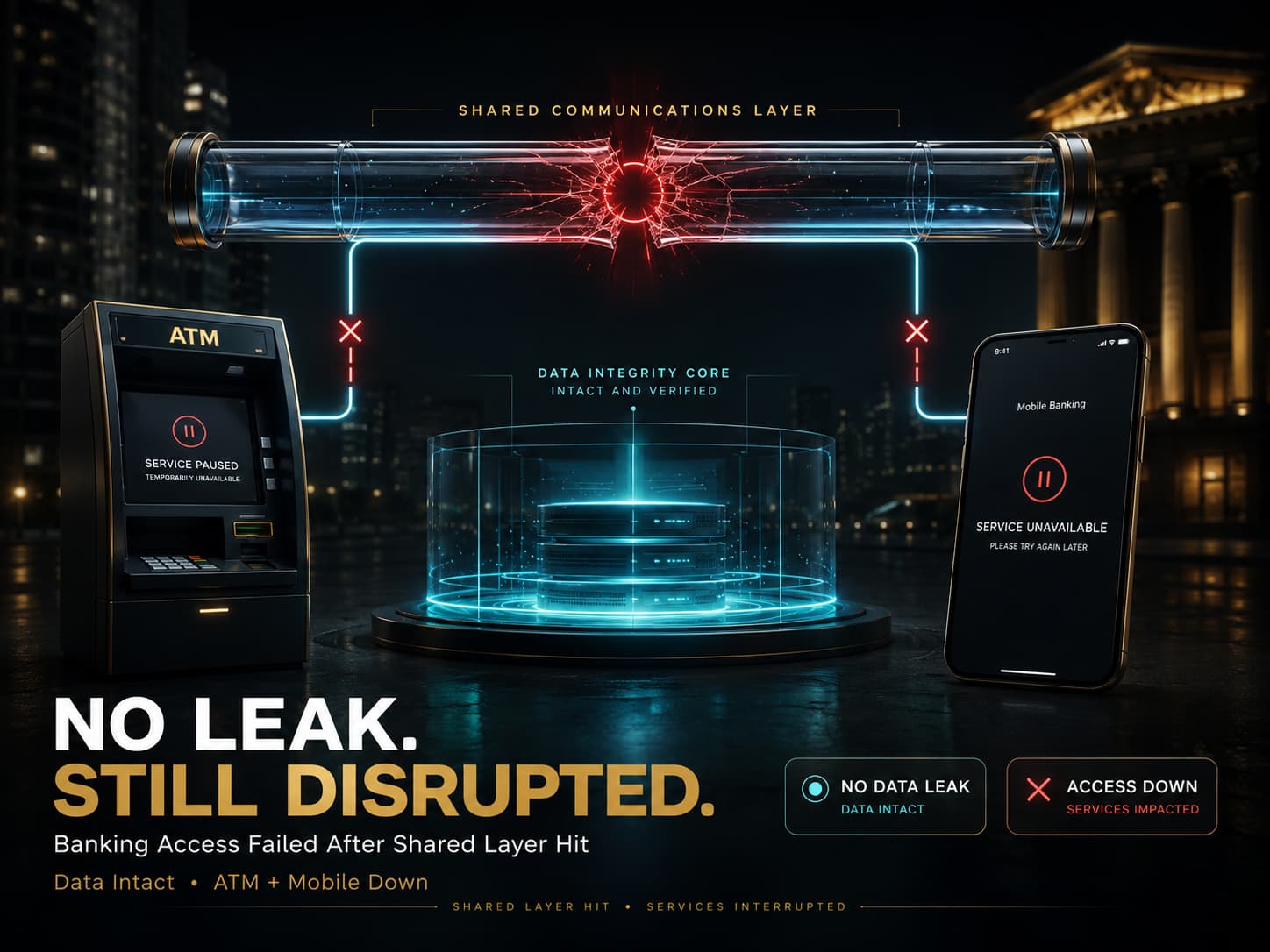
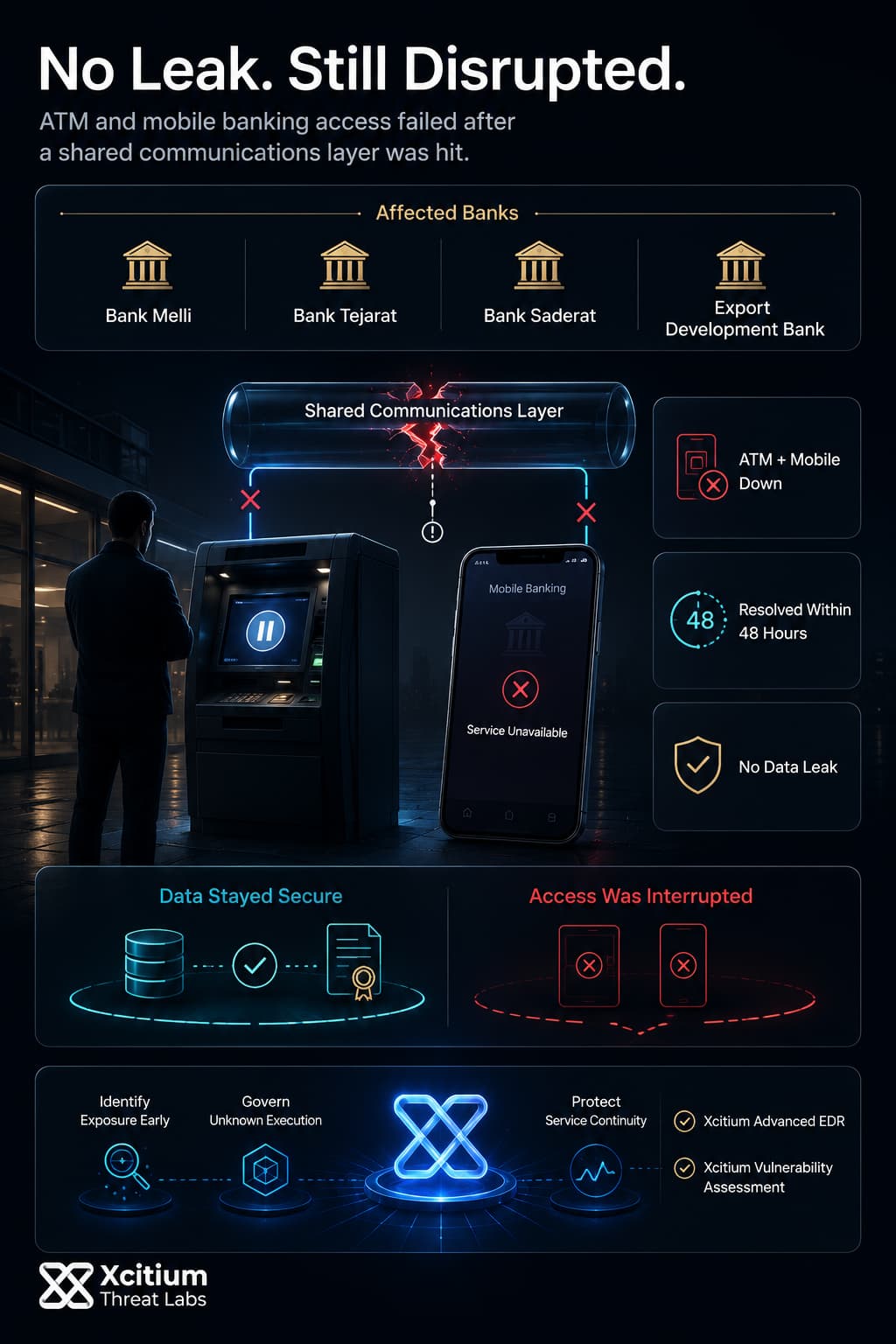
Lately, a cyberattack affected four Iranian financial institutions: Bank Melli, Tejarat, Saderat and the Export Development Bank. According to Iran’s banking coordination council, the cyberattack aimed at disrupting the joint communications system of those banks.
As officials claim, none of the banks’ customer databases suffered from the intrusion since there were no leaks or any other kind of data breaches. Practically, it meant that online banking or ATM services suffered from the downtime for a short time and then returned back to normal operation. Thus, by Sunday, services of such banks as Bank Tejarat and Export Development Bank were fully functional again.
- Banks under Attack: State-owned Bank Melli, Bank Tejarat, Bank Saderat and Export Development Bank.
- The Method of an Attack: An intrusion into the joint communications system used by those banks.
- Effect of an Attack: Short-term service outage; system specialists fixed the problem.
- Status of Data: No unauthorized access to customer’s information occurred.
All this information proves that it was only a minor intrusion into Iranian banks’ infrastructure. As stated by the bank’s protection council, the defense measures were launched instantly, with additional account setup being provided for customers.
Scope and Impact: No Data Leaked
All evidence points to a disruption rather than a hack for data exfiltration. The most sensitive databases stayed offline or shielded during the breach. This is a key difference from many cyber incidents, rather than stealing account details or money, the attackers seem to have only dropped or jammed the communications link between banks.
The banks’ own response illustrates this focus on continuity. Technicians said that as soon as anomalous activity was detected, they implemented preventive controls to protect both customer data and the banking infrastructure. All systems are reportedly now under control and being re-secured. Officials even transferred funds to backup accounts overnight, ensuring people could still complete transactions.
These steps underscore that maintaining banking operations was the top priority, not investigating a breach of confidentiality. It also suggests that critical customer data is kept segregated and was insulated from the communication outage.
Technical Clues: Communications Network Hit
The type of the attack on a communications infrastructure provides some hints. Banks usually use shared communication systems for various activities such as transactions via ATMs, inter-bank exchanges, or reporting purposes. In case any part of this network is attacked, all the banks using this shared system would be affected at once. The phrase “shared communications infrastructure” clearly shows that there was only one way to affect a group of banks at the same time. Another option is a DDoS attack carried out on the shared communications infrastructure.
Context: Geopolitical Tensions and Cyber Warfare
This particular event has taken place against the backdrop of high tension in the region. Early in June 2026, there were reports about an attack by Israel on Iranian sites and Iranian counterattacks via drones. Following the accusation of hacking attacks on an Israeli water facility, Iran launched an attack on the Israeli port of Bandar Abbas through cyber means.
Moreover, hacktivist movements from either Iran or elsewhere can react to military actions through an attack on the enemy infrastructure. It is relevant to note that some Iranian sources refer to this case specifically as Iranian retaliation for earlier actions of Israeli troops. Meanwhile, although the state-run media calls it merely a ‘limited cyberattack’, observers see parallels and conclude that this might have been part of cyber-retaliations within the Iran-Israel conflict.
Thus, briefly summarized, Iran was hit by a cyber intrusion that managed to bring all the banking services in the country down without causing any other damage than temporary access to accounts for an hour or two. Banks around the world experience cyber threats of all sorts constantly ranging from phishing to ransomware, investing millions into securing their networks and data.
However, this attack has shown a weakness: one vulnerability has paralyzed almost the entire banking system of the country in minutes. Moreover, it has brought forward the question of what separates cyber-crime from cyber-warfare and when does money become propaganda?
Conclusion: When Cyberattacks Target Availability, Not Data
The Iran banks incident shows that cyber risk is not always measured by stolen records. Sometimes the business impact comes from disruption alone. Four major banks were affected because attackers targeted shared communications infrastructure, temporarily interrupting services while customer data reportedly remained secure.
That distinction matters. No data leak does not mean no operational risk.
Why This Threat Matters
Financial institutions depend on uptime, trust, and transaction continuity. Even a limited cyberattack can create public concern when banking services slow down, ATMs become unreliable, or customers cannot access accounts.
- Shared communications systems can become single points of failure
- Service disruption can damage trust even without data theft
- Financial infrastructure is a high-value target during geopolitical tension
- Backup routing and emergency controls become critical during live incidents
- Banks must prove not only that data stayed safe, but that operations remained governed
This incident reinforces a larger lesson, resilience is not only about preventing breaches. It is also about maintaining control during disruption.
Where Xcitium Changes the Outcome
Xcitium helps organizations move from reactive visibility to Execution Governance.
For financial environments, this means security teams need more than alerts after disruption begins. They need enforceable control, validated posture, and evidence that critical systems are protected before attackers exploit weak points.
Xcitium Vulnerability Assessment helps identify exposed systems, weak configurations, and infrastructure risks before they become service-impacting incidents.
Xcitium Advanced EDR, powered by Xcitium’s patented Zero-Dwell platform, governs unknown execution before trust exists.
Unknown code does not receive unrestricted execution rights.
Code can run without being able to cause damage.
Runtime control is enforced before impact.
Security outcomes become provable, not assumed.
This is Execution Governance in practice.
Control before trust. Enforcement before disruption. Proof after control.
Availability Is Security. Proof Is Trust.
The Iran banks cyberattack is a reminder that attackers do not need to steal data to create pressure. Disruption alone can affect customers, confidence, and national infrastructure.
Detection can tell teams something happened.
Execution Governance proves what unknown activity could not do.
For banks, insurers, MSPs, and critical service providers, that proof matters.
Identify exposure early.
Govern unknown execution.
Protect service continuity before disruption becomes business impact.
Choose Xcitium to strengthen cyber resilience with control that can be proven.