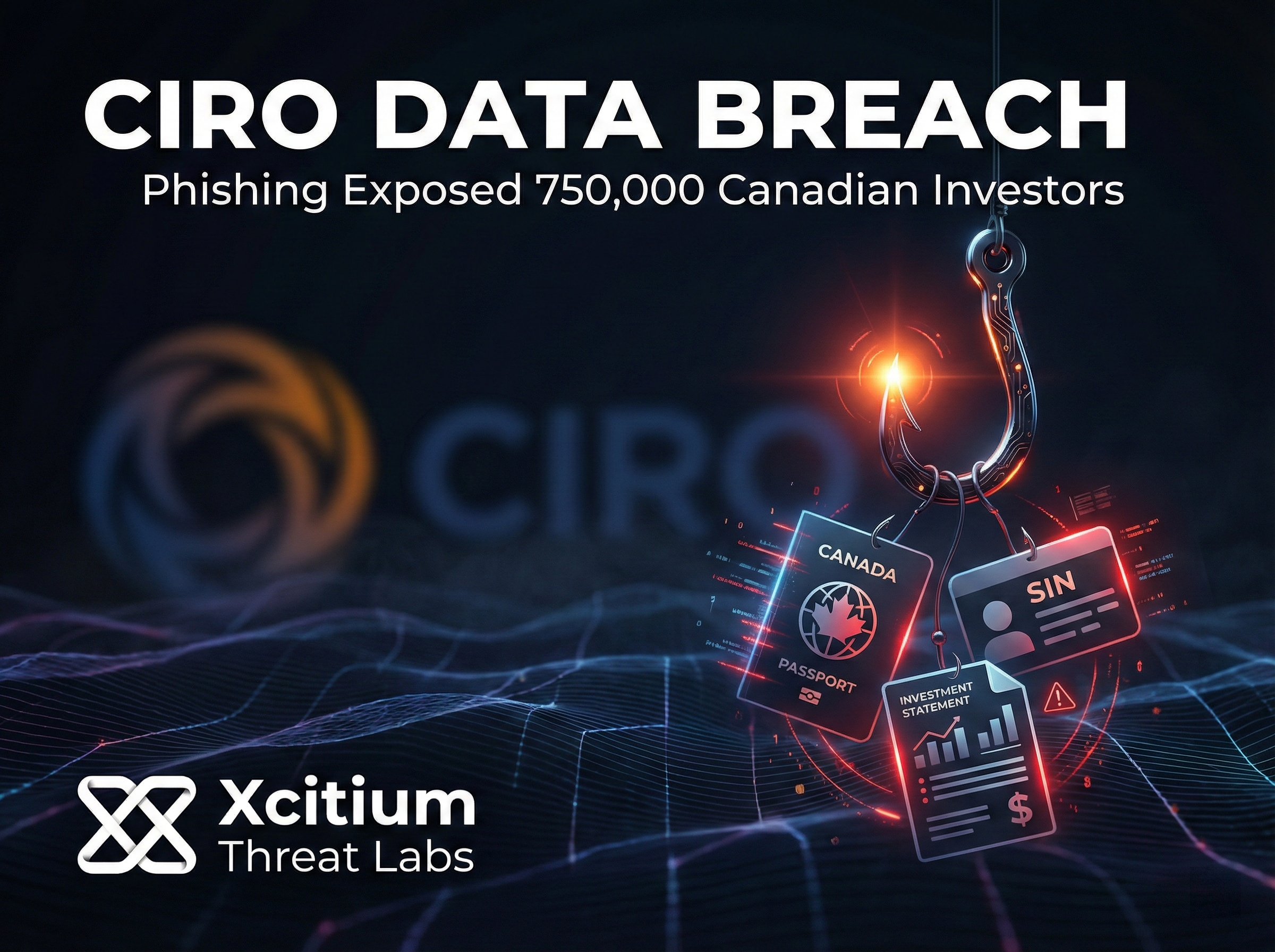
CIRO, Canada’s investment regulator, was hit by a data breach after a phishing attack that exposed personal financial information of 750,000 investors.
Major Cybersecurity Breach Hits Canadian Investment Regulator CIRO
Last year, the Canadian Investment Regulatory Organization (CIRO) experienced a significant breach of its data that affected the details of about 750,000 Canadian investors. This breach can be attributed to a well-structured phishing attack that overcame the organization’s defenses, a clear indication that even regulators are not safe from cyber threats.
The breach was discovered by CIRO in August 2025, and the organization immediately isolated unnecessary systems and began an investigation. Nevertheless, the process of ascertaining the affected systems was rather prolonged. The breach was publicly admitted by the organization on August 18, 2025, but the extent of the breach was not known until January 2026.
In all, over 9,000 hours were spent with cyber security professionals evaluating the attack. By the time the investigation was over, it was clear that this was one of the largest cyber security attacks that had been experienced in the Canadian financial sector during the year 2025.
CIRO BREACH REPORT 2026
Social Insurance (SIN)
Critical for identity theft and fraudulent account creation.
Investment Accounts
Exposure of financial portfolios and transaction history.
Government IDs
Passport and Driver’s License numbers compromised.
Dates of Birth
Used to bypass security questions and target victims.
Annual Income
Financial standing used for profiling high-value targets.
Phone Numbers
Enabling phishing texts and social engineering calls.
Sensitive Personal Information Exposed in the Attack
The attackers managed to exfiltrate a trove of sensitive personal and financial data from CIRO’s systems. CIRO’s update revealed that the compromised information varies by individual, but it may include highly confidential details. For example, data potentially exposed in the breach includes:
- Birth Dates: Providing attackers with the ability to authenticate identities or scam victims.
- Phone Numbers: Facilitating phishing messages or social engineering calls.
- Annual Income: Disclosing financial status, which may be used for fraudulent purposes.
- Social Insurance Numbers (SIN): Extremely important for identity theft and creating illegitimate accounts.
- Government-Issued ID Numbers: These are very sensitive and may include numbers like a driver’s license number or a passport number.
- Investment Account Numbers and Statements: Giving insight into financial portfolios and transactions.
In addition, CIRO clarified that no login credentials, passwords, or security question answers were compromised since it doesn’t store that information. However, the breadth of the stolen data still poses a serious risk for identity theft and financial fraud. Consequently, investors impacted by the leak could be targeted for follow-up scams or spear-phishing attempts using their exposed personal information.
CIRO Data Breach Impacts 750K Investors
CIRO responded to the breach with an extensive investigation and immediate measures to support those affected. The self-regulatory body engaged a leading third-party cybersecurity firm and spent thousands of hours combing through systems to determine exactly what was accessed. As a result of this forensic deep-dive, CIRO found no evidence so far that the stolen information has been misused or leaked on the dark web.
Nevertheless, the organization isn’t taking any chances. It notified law enforcement and relevant privacy commissioners about the incident, and it has been directly reaching out to the roughly 750,000 affected investors.
Response Strategy
Moreover, CIRO is offering two years of free credit monitoring and identity theft protection with major credit agencies to all impacted individuals. This proactive step is intended to help victims quickly detect any misuse of their personal data. Affected investors received instructions to enroll in these services, and those who did not get a notice can contact CIRO to double-check if their data was involved.
In addition, CIRO’s leadership publicly apologized for the incident and pledged to strengthen the regulator’s cybersecurity defenses to prevent future breaches.
Implications for Investors and the Financial Industry
For Investors
- Exposure of sensitive data increases the risk of identity theft and financial fraud.
- Investors are advised to carefully track their financial accounts and credit reports for any unusual transactions.
- The stolen information could also be used to create targeted phishing messages and phone calls.
- Any sort of unsolicited message that contains information related to investment accounts or personal information must be viewed with extra care.
For the Financial Industry
- The CIRO breach demonstrates that regulatory and oversight bodies are also prime targets, not just banks or corporations.
- Financial institutions and regulators may need to:
- Reassess existing cybersecurity controls and policies
- Strengthen employee awareness and social engineering training
- The incident reinforces the importance of robust incident response and breach communication plans.
Legal and Regulatory Impact
- The CIRO incident ranks among Canada’s most significant cybersecurity breaches of 2025, alongside attacks on major public and private organizations.
- The breach has triggered legal and regulatory scrutiny, including a proposed class-action lawsuit in Canada.
- Allegations of delayed or insufficient breach notification highlight rising expectations for transparency and rapid response.
Conclusion: When Regulators Get Phished, Everyone Pays
The CIRO breach proves a hard truth about modern finance, even highly regulated institutions can be compromised through one successful phishing path. The result was not a minor leak, it was high-fraud identity data tied directly to investor financial context.
Why This Breach Is So Dangerous
This incident exposed the exact attributes criminals use to scale identity theft and targeted fraud, including Social Insurance Numbers, government ID numbers, dates of birth, phone numbers, annual income, and investment account details. CIRO noted it does not store passwords or security question answers, but the stolen dataset is still enough to power convincing follow-up scams and account fraud attempts.
Where Xcitium Changes the Outcome
For organizations using Xcitium Cyber Awareness Education and Phishing Simulation, phishing-driven breaches like this are far harder to trigger.
- Employees learn to spot realistic lure patterns and escalation tactics before they click
- Simulated phishing builds pause and verify habits under pressure
- Suspicious requests for access or data get challenged, not approved
- The attacker’s advantage collapses at the human decision point
With Xcitium in place, this attack would not succeed, because the initial phishing step is far less likely to convert into access and exfiltration.
Protect Investors by Blocking the First Mistake
In finance, breach impact is measured in fraud risk and trust loss. Reduce the odds of compromise where most incidents begin, at the inbox. Choose Xcitium Cyber Awareness Education and Phishing Simulation.