A New Era of Kinetic Warfare: Cloud as a Military Target
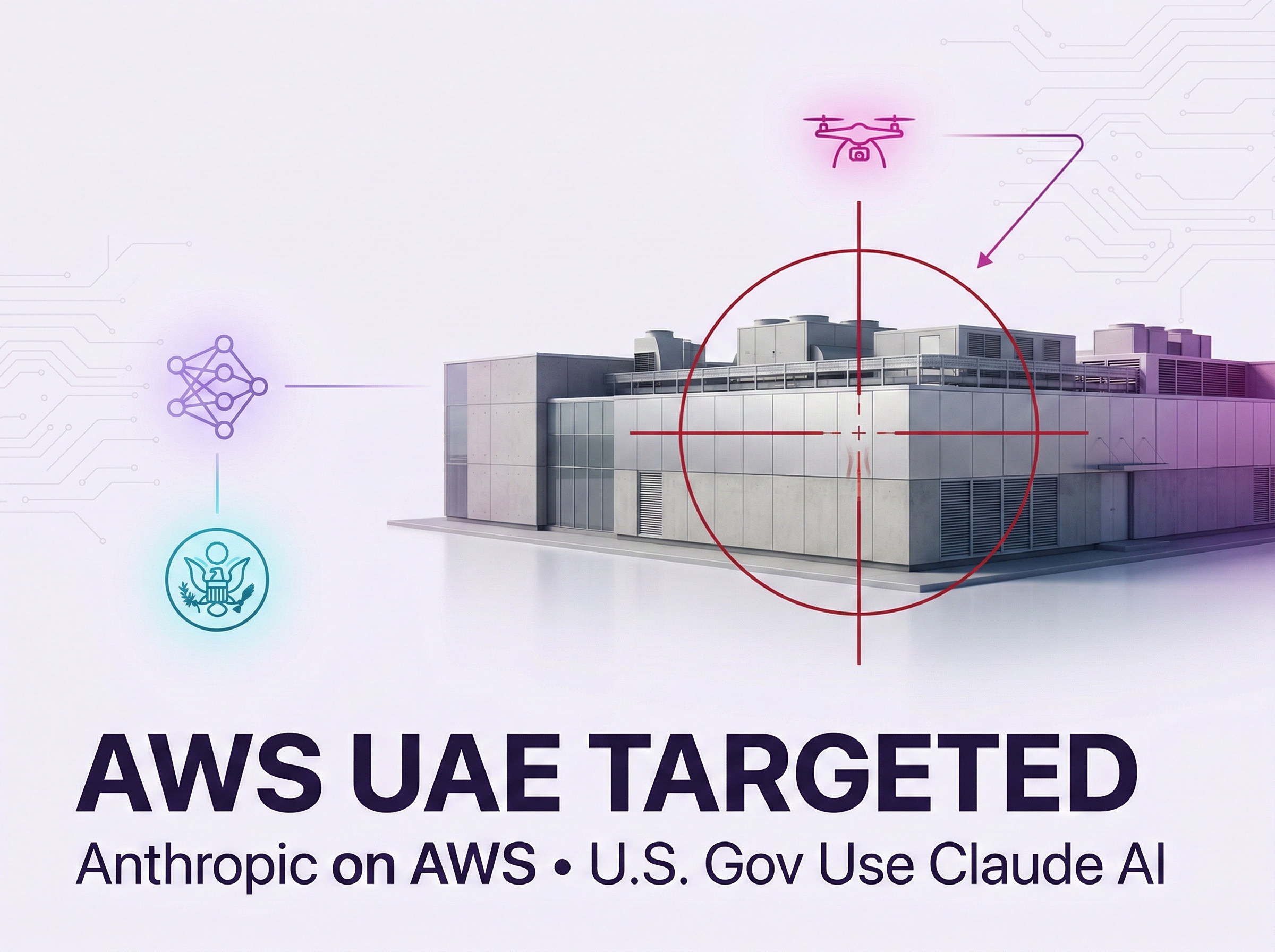
For the first time, cloud infrastructure is a direct target of military attacks. Reports suggest that drone strikes carried out by Iran were aimed at Amazon Web Services (AWS) data centers located in the Middle East region. In particular, two of these centers were located in the UAE, and another was located in Bahrain.
The difference between the physical and digital domains has been blurred. This new development, therefore, presents a major need to rethink global security models. This event demonstrates the vulnerability of our connected world.
Why Iran Targeted AWS Data Centers
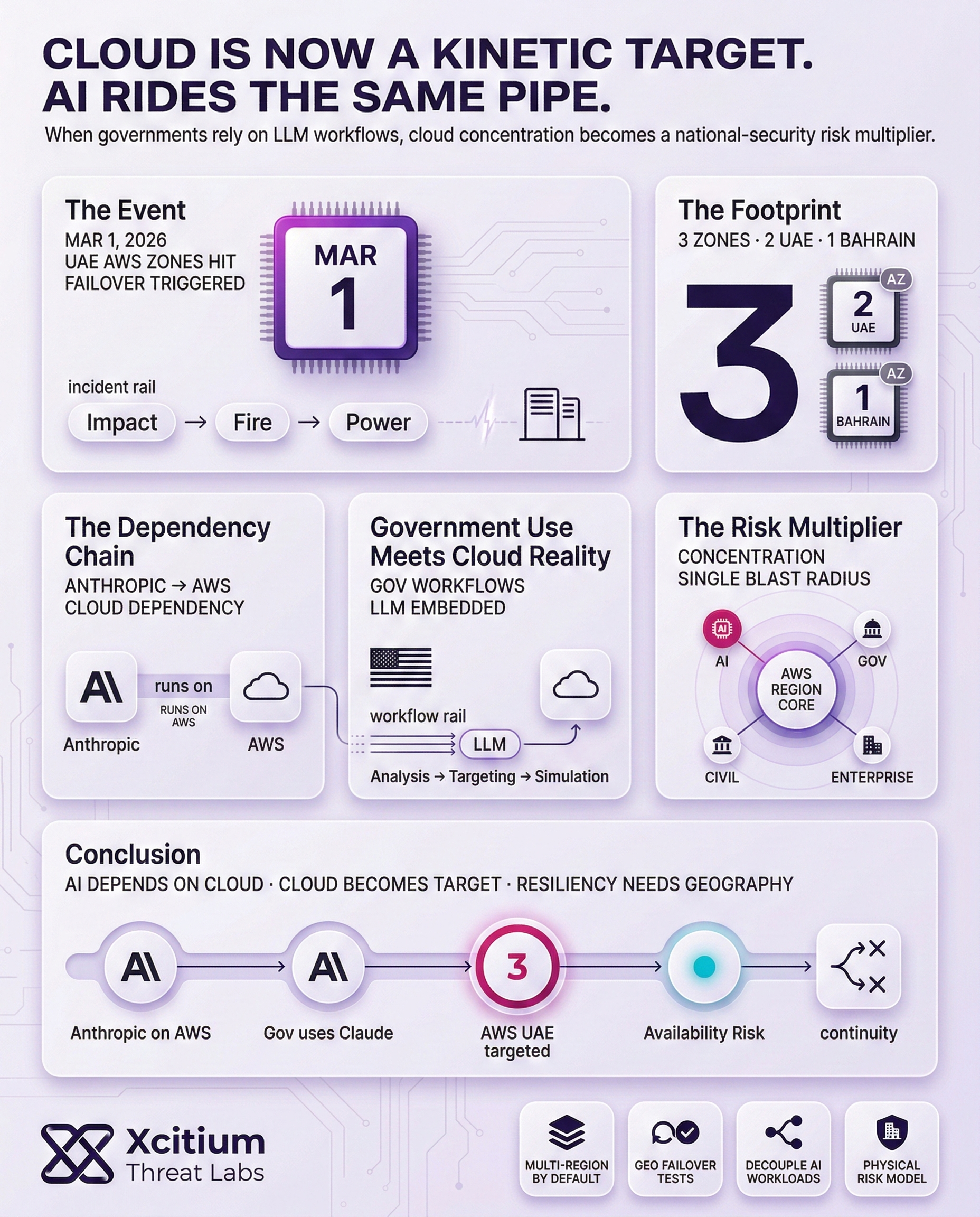
On 1 March 2026, AWS revealed that objects struck its United Arab Emirates (UAE) availability zone, which caused fires and power outages. The next day, AWS confirmed the incident, stating that the strikes directly impacted the UAE’s two availability zones and Bahrain’s one availability zone due to a drone strike, which caused structural and water-related damage.
If the strikes were intentional, they represent an example of asymmetric warfare on dual-purpose infrastructure. As the U.S. Department of Defense’s Joint Warfighting Cloud Capability relies on cloud service providers such as AWS, Microsoft, Google, and Oracle, the cloud regions have emerged as key infrastructure for military logistics and command and control operations.
The compromise of several availability zones in the UAE and Bahrain questions the conventional assumptions on the resiliency of the cloud infrastructure. The localized kinetic attacks impacted not only civilian infrastructure but also the region’s vital military computing capabilities.
Immediate Impact and Operational Disruptions
The strikes also caused physical disruptions in the targeted areas. Sparks were witnessed in the UAE. Moreover, power loss was also experienced in two AWS availability zones. Amazon recommended that their customers fail over to another region.
When the cloud, which acts as the backbone of the digital world, is no longer considered a safe option, then the entire world is at an unprecedented threat.
U.S. Government AI Procurement Shift: Anthropic and OpenAI
This change in artificial intelligence leadership within the Department of Defense, hereafter referred to as the Department of War, represents a fundamental shift in favor of OpenAI over Anthropic.
Initially, Anthropic was awarded a $200 million contract, with Claude positioned to become the first high-level artificial intelligence to enter classified military systems for the purpose of intelligence gathering and operational planning.
However, the collaboration between the two was soon terminated in early 2026 after Anthropic’s Chief Executive Officer, Dario Amodei, made a series of rigorous and legally binding requirements to prevent Claude from being used in autonomous warfare and mass surveillance of citizens within the country.
Taking full advantage of this situation, OpenAI’s Chief Executive Officer, Sam Altman, was able to rapidly enter into a new agreement with the Department of Defense.
Unlike Anthropic, OpenAI proposed a far more flexible agreement with the Department of Defense, agreeing to monitor and control the implementation of ethics through technical filters and cloud-based controls rather than through legally binding requirements.
This strategic shift in OpenAI’s position allowed the company to become the dominant artificial intelligence supplier to the military, in spite of strong backlash from users who claimed the company had abandoned its core safety mission.
In the end, the Pentagon chose OpenAI over Anthropic not only for its safety record but for its flexibility in military implementation compared to Anthropic’s rigid ethical requirements.
AI Infrastructure: A New Front in Modern Warfare
The accelerated pace at which the field of AI is progressing adds yet another dimension of complexity to the ever-changing scenario of modern warfare. Anthropic, rely on Amazon Web Services (AWS) to enable the broad scope of activities they execute.
As a result, the data centers on which AI systems rely have evolved from conventional business environments to critical military targets. By directly impacting the infrastructure on which AI systems rely, one is, in essence, limiting the technological capabilities of the adversary.
This new reality underscores several critical points:
- Strategic Asset: The information provided by the AI models proves to be critical for both the civilian and military leadership, and this influence is considerable.
- Dual-Use Technology: The fact that the core infrastructure of the technology supports and underlies both commercial and military uses creates an environment of blurred engagement.
- Centralized Vulnerability: For the training and implementation of an AI system, considerable computer resources are required, and this tends to be centralized in a small number of data centers.
- Psychological Impact: An attack on the cognitive core of a country or organization results in a sense of fear and uncertainty among the population, thereby affecting the stability of the market.
Recently, the issue of the rising risks related to the development of artificial intelligence was emphasized by Dario Amodei, the chief executive officer of Anthropic. He emphasized that the safety issues related to the development of AI should not only focus on the integrity of the algorithms, but also on the physical infrastructure.
In particular, the protection of a data center from the threat of drones is different from the protection of a database from the threat of hackers.
The development of decentralized AI architectures might accelerate, as such an approach intrinsically reduces the risks, as there is no single point of failure. Therefore, the development of AI might differ from the current centralized cloud-based solutions.
Beyond Amazon: The Vulnerability of Global Tech Giants
Alphabet, Microsoft, and Alibaba possess significant data centers across the Middle East region, providing the backbone for the global digital infrastructure for millions of users and numerous businesses. The Iranian attacks highlight the fact that no cloud provider can escape the threat of kinetic attacks.
This reality has sent shockwaves through Silicon Valley and beyond. There exists a critical need to reassess the global risk level for the tech industry. Although the focus on cybersecurity must remain, physical security must also become a priority.
Conclusion: Cloud Is Now a Kinetic Target
The reported drone strikes against AWS availability zones in the UAE and Bahrain mark a strategic shift. Cloud infrastructure is no longer treated as neutral commercial terrain, it is being treated as military grade, dual use infrastructure worth physically disabling. Fires, power outages, and customer failover guidance show how quickly localized damage can ripple into regional digital disruption.
Why This Changes the Risk Model
This is not only a cloud resiliency story, it is a geopolitics and continuity story.
- Availability zones can be impacted by physical damage, not just cyber events
- Dual use cloud regions support both civilian services and military operations
- Centralized compute becomes a single point of failure for AI systems and national capability
Security planning must assume that outages can be forced from outside the network.
Why AI Raises the Stakes Further
AI systems depend on concentrated infrastructure. When AI becomes a strategic asset, the data centers powering it become part of the battlefield. This requires a different mindset, physical defense, geographic redundancy, and decentralized architectures that reduce single points of failure.
What Organizations Should Do Next
Treat cloud concentration risk as an executive level resilience issue.
- Design for multi region failover and test it under real outage assumptions
- Identify workloads that cannot tolerate regional loss and build offline capable fallbacks
- Reduce dependency on a single provider or single geography where feasible
- Align business continuity, cybersecurity, and physical risk planning into one playbook