Why the FBI’s Handala Warning Matters for Everyday Tech Users
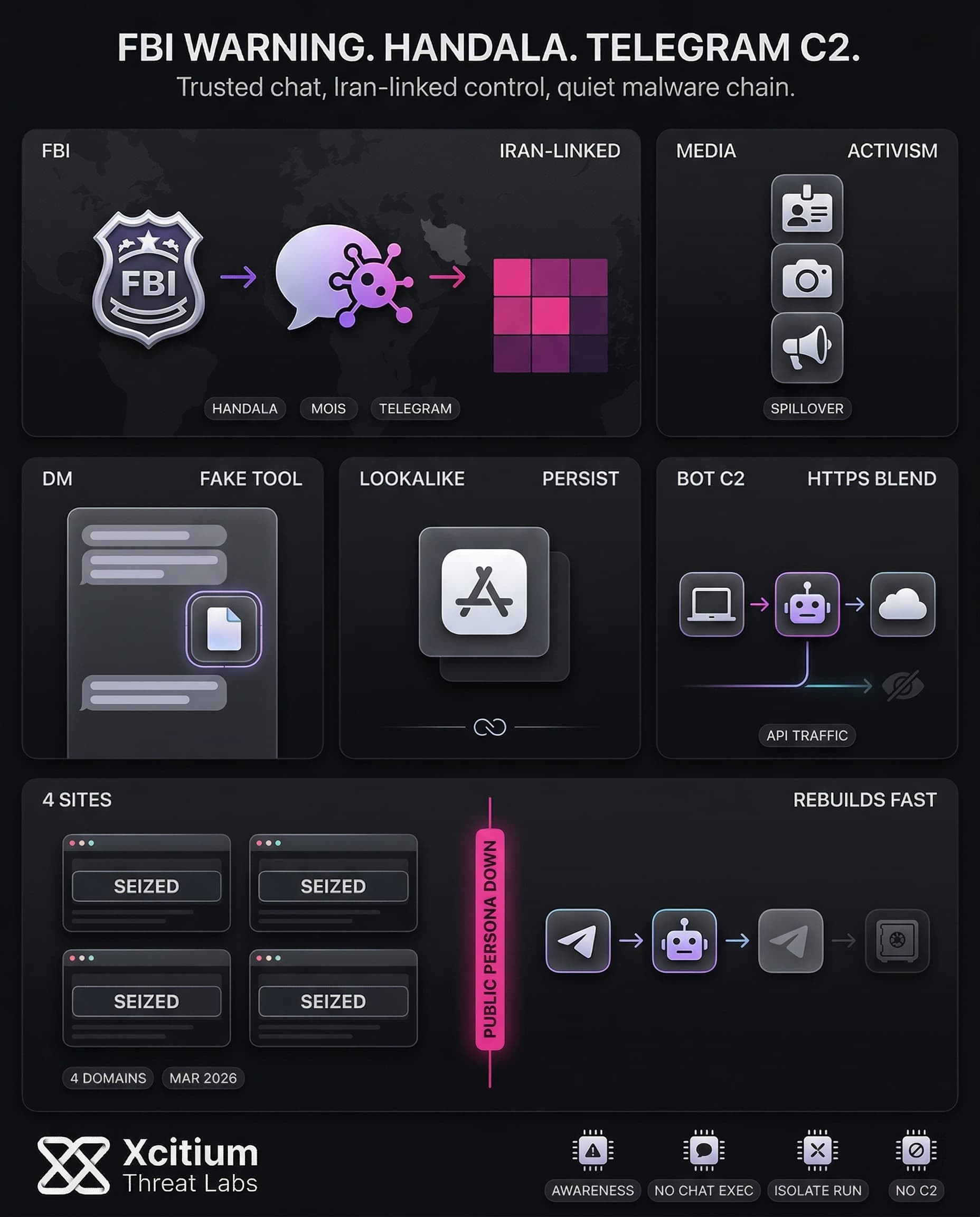
A recent alert from the FBI highlighted a technique that continues to be seen in a variety of recent cyber activities: attackers blending in with normal internet traffic. In this case, the FBI revealed Iranian actors associated with Iran’s Ministry of Intelligence and Security (MOIS) utilizing Telegram as a command infrastructure for Windows malware. This malware has primarily been used against dissidents, journalists, and opposition groups, but there is a risk of spillover to a wider audience if the lures are forwarded.
This FBI alert was released just one day after law enforcement agencies disrupted several domains associated with the actors. Specifically, authorities seized four domains associated with the actors: handala-redwanted[.]to, handala-hack[.]to, justicehomeland[.]org, and karmabelow80[.]org. In March 2026, authorities seized several domains associated with public personas used by actors, including Handala.
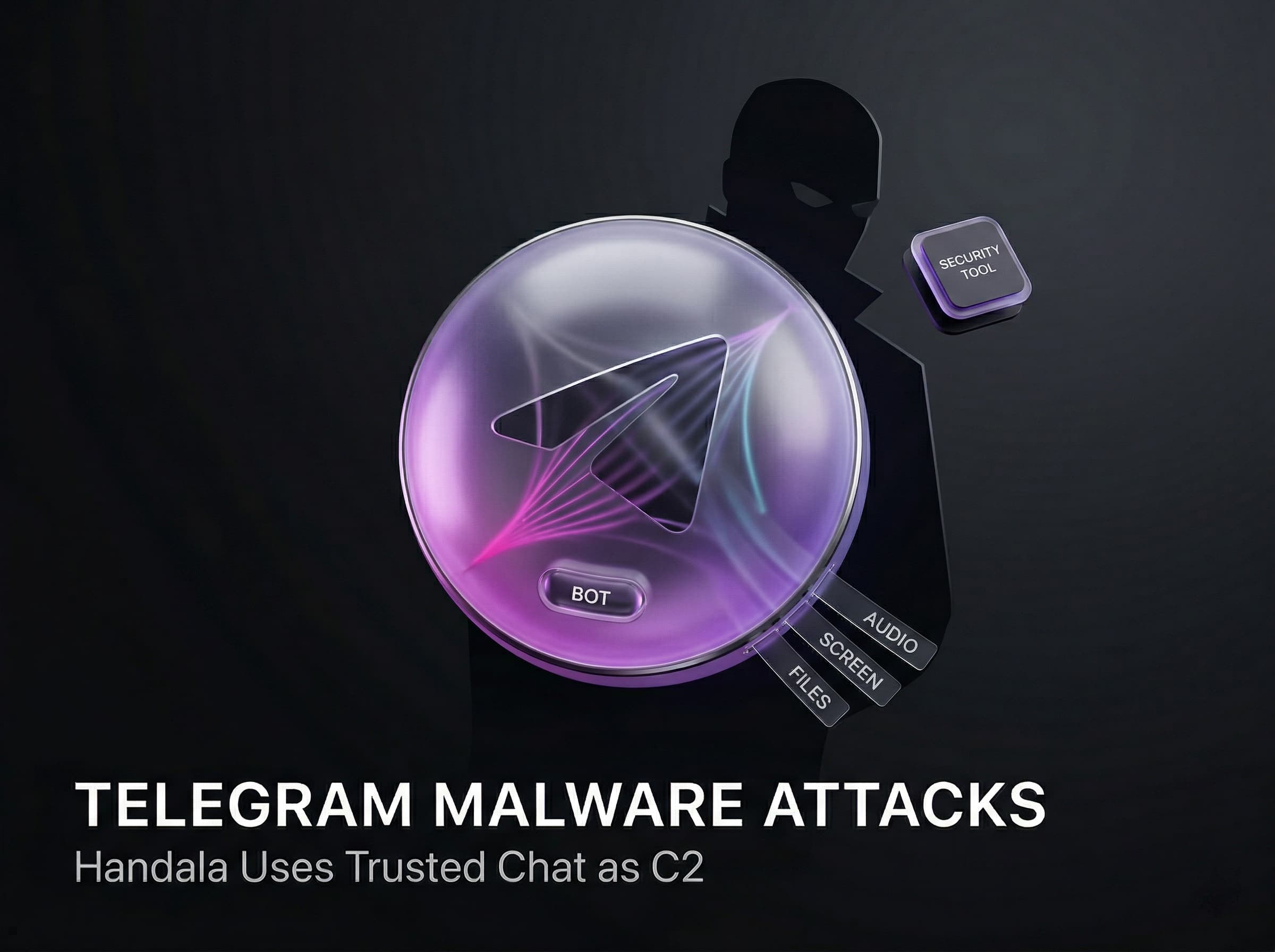
How Telegram Became a Stealthy Malware Control Channel
Telegram’s role here is not “a bug in Telegram.” Instead, attackers are exploiting a simple reality: many organizations and networks already allow traffic to popular web services. When malware communicates with a legitimate service, defenders may struggle to separate normal use from abuse.
In fact, the FBI describes the malware using a Telegram bot to create two-way communication with victims’ devices via the Telegram API domain. As a result, the attacker can send instructions and pull back stolen data while blending into expected HTTPS traffic. This approach also aligns with a known pattern documented in the MITRE ATT&CK framework: adversaries use legitimate web services for command-and-control because it provides “cover” and often adds resilience.
From Friendly Message to Malware Infection: What the FBI Says Happens
According to the FBI, the intrusion path often starts with a direct conversation. Attackers contact a target through messaging apps and impersonate either a known person or platform “support.” Next, they persuade the victim to accept a file transfer that looks like a legitimate Windows program. The FBI notes this first stage is frequently tailored to a target’s “pattern of life,” which suggests reconnaissance happens before the message is sent.
Once the victim runs the file, the operation shifts into a multi-stage flow. The FBI describes stage-one “masquerading” malware that resembles common apps and carries components for a follow-on implant. Example filenames listed in the alert include items such as “Telegram_authenticator.exe,” “WhatssApp.exe,” and “KeePass.exe.” Then, a persistent implant connects to Telegram bots, enabling remote access and data theft.
To help make the chain more visible, look for these useful “red flags” that may indicate a problem:
- Unexpected executable files received in a chat, especially if labeled as “security updates” or “fixes for your account.”
- App lookalikes that resemble the apps you trust but come from a sender that is not a source for those apps.
- Suspicious Telegram API activity from a computer that does not normally access Telegram, especially after running a new file.
Data Theft, Surveillance, and “Hack-and-Leak” Pressure Tactics
The FBI’s alert goes beyond “steal some files.” It describes malware functions that support monitoring and coercion. For instance, the FBI lists components capable of collecting screenshots, capturing caches, compressing files with a password, deleting files, and staging data to be sent outward. It also references malware logic tied to recording screen and audio during Zoom sessions, which is especially concerning for activists and journalists.
This technical layer connects to a broader influence strategy. The FBI explicitly frames MOIS activity as blending compromise with selective leaking and reputational harm an approach often described as “hack-and-leak.” Meanwhile, the United States Department of Justice has publicly described Iranian cyber-enabled psychological operations that combine disruptive attacks with intimidation, doxxing, and narrative manipulation.
The Handala Brand, Domain Seizures, and the Broader Campaign Context
The FBI warning was also released alongside the disruption efforts from law enforcement agencies. In March 2026, several domains related to the public personas used in the operation were confiscated, including those related to Handala. According to the DOJ, these domains are part of a shared playbook related to MOIS, which includes data leak sites and “faketivist” messaging intended to intimidate the target.
It is also important to understand that, despite the domain takedowns, it appears that the operation was not necessarily terminated, the group was able to rapidly re-deploy their website after the operation was taken down. There are also reports related to operational impact, which was allegedly related to the operation under the Handala name, including fears related to healthcare disruptions.
Practical Mitigations That Actually Reduce Risk
For an individual, the strongest defenses are behavioral and simple, and this is because they involve a conversation to begin with. To begin with, one should slow down if a message is urgent. Secondly, check the sender of a message via an alternative channel, especially if they are asked to install software. Thirdly, one should consider any unsolicited “account security tool” to be malicious until it is proven otherwise.
For a team, one should focus on defenses that control what a single click can do. The FBI’s recommendations for mitigation include updates, trusted sources for downloads, anti-malware software, strong passwords, and multi-factor authentication. A team should also monitor for unusual Telegram API connections from endpoints that should not be communicating with Telegram, and this is because this is a strong indicator of an attack.
Conclusion: When a Trusted Chat App Becomes the Command Channel
The Handala campaign shows how modern malware no longer needs suspicious infrastructure to stay hidden. By delivering fake “security tools” through direct messages and then using Telegram bots as command and control, the attackers turned a widely trusted platform into both the lure and the control plane. The victim sees a familiar app. The network sees normal HTTPS traffic. The attacker gets remote access, surveillance capability, and data theft.
Why This Threat Is So Effective
This campaign succeeds because it exploits trust at multiple layers:
- A direct message feels personal and urgent
- The file looks like a familiar app or security utility
- Telegram API traffic blends into expected web service activity
- The malware can capture screenshots, compress files, and support ongoing surveillance once it is running
The real danger is not just infection. It is the quiet persistence that follows.
Why Organizations Are Exposed
Most teams are trained to watch for suspicious attachments in email. This campaign starts in private messaging and ends in legitimate cloud traffic.
That shift creates a blind spot. Users are more likely to trust a conversation that appears personal. Security teams are less likely to flag communications with a popular platform. By the time the implant reaches Telegram bot control, the attacker is already operating inside normal traffic patterns.
Where Xcitium Changes the Outcome
With Xcitium in place, this attack would NOT succeed.
- Xcitium Cyber Awareness Education and Phishing Simulation trains users to treat unsolicited “security tools,” urgent support claims, and chat-delivered executables as hostile by default.
- Xcitium Advanced EDR stops the malware chain at execution, so even if the file is launched, code can run without being able to cause damage.
- The attacker loses both the human opening and the runtime advantage they need to turn Telegram into a stealthy control channel.
Stop the Message Before It Becomes a Backdoor
Attackers are no longer relying on obviously malicious infrastructure. They are hiding inside the platforms people already trust. Train users to question the file, then enforce protection that prevents one click from becoming persistent control.