Visitors to compromised websites saw a browser-style certificate warning and a button that offered to repair the problem. On selected Windows systems, that button downloaded a malicious installer. Elsewhere, espionage operators entered through a vulnerable Linux server or deployed new backdoors on telecom networks. Sparrow malware connects these activities through shared code, loaders and infrastructure.
The activity spans three China-linked clusters called SilentDelivery, OceanGate and DarkWire. Their targets include government bodies, telecom providers and critical infrastructure. The overlap suggests that a developer or supplier tracked as CopperDragon supports multiple operations. Who ran each intrusion remains uncertain.
SilentDelivery Selects Who Sees The Warning
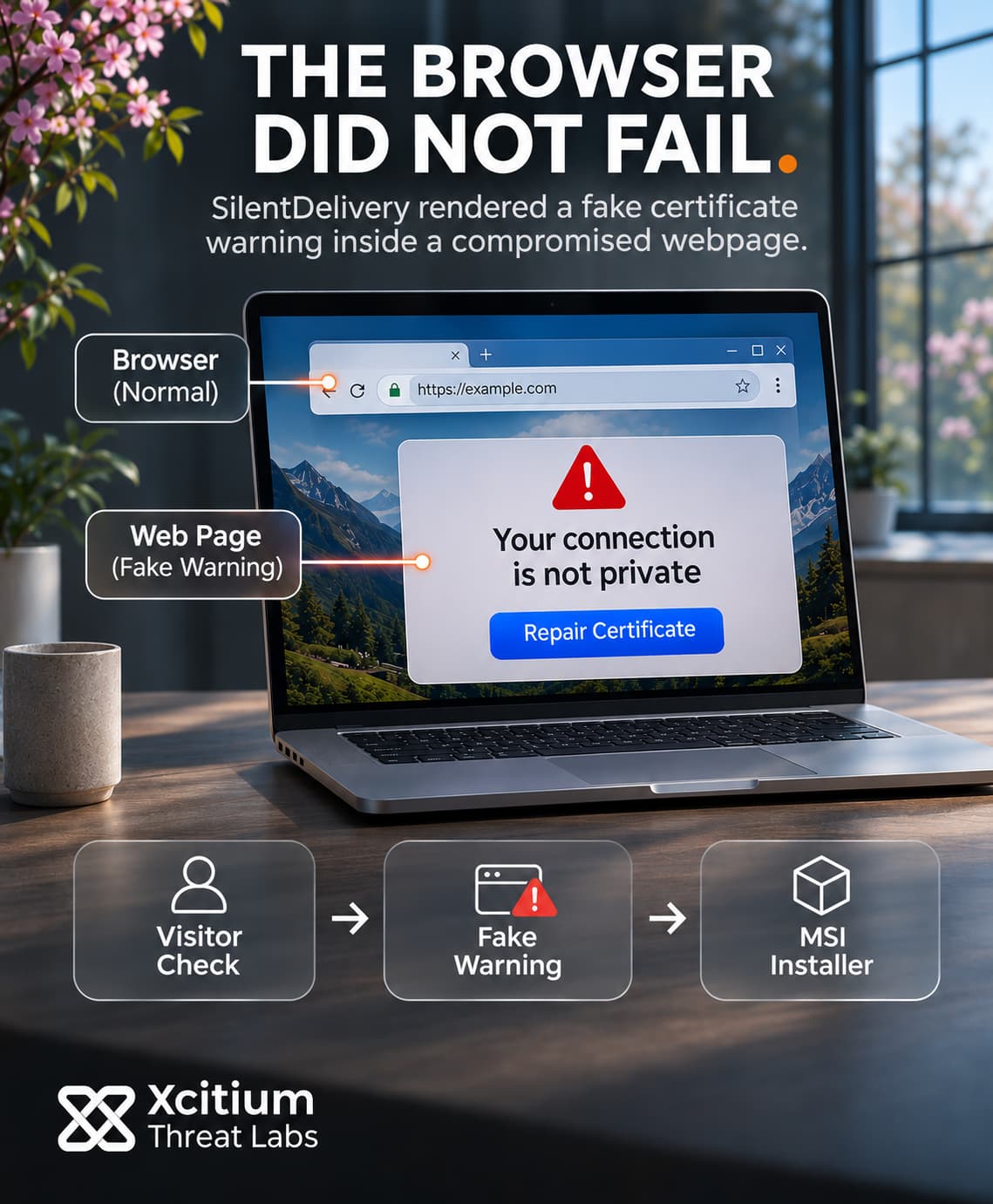
SilentDelivery planted obfuscated JavaScript on websites frequented by its targets, including government, shipping and research sites in Europe and Asia. The script checks for Windows. In some versions, it also checks that the page belongs to the intended compromised domain.
Next, the script repeatedly sends status checks to a command server, which can assess the visitor’s IP address and location. In the documented script, an HTTP 200 response leaves the page intact. If the server fails to respond, the script replaces the page with the fake warning. As a result, two people can open the same site and see different content.
Clicking the certificate button reports the compromised page’s address to the command server and starts an .msi download. The visitor must then run the package to reach the payload. In the documented cases, that package delivered either SquadC or a SparrowDoor variant. The apparent browser error was content rendered by the page.
SquadC Carries The Foothold Into The Next Logon
A separate loader decrypts SquadC and runs it in memory. Some configurations check for virtual machine artifacts or require a browser process to be present. That second condition fits the delivery path because a browser would normally remain open after the download.
Once active, the backdoor can run commands, take screenshots and manage files. It also adds an entry to the Windows registry’s Run key under a name that resembles a Windows update assistant. Consequently, signing in again can start the payload after the original browser session ends.
OceanGate Takes Credentials From Linux To Windows
OceanGate began with exploitation of an internet-facing Linux server. The specific flaw remains undisclosed. First, the operators deployed AnnobinDoor, which can give an intruder a remote shell and tunnel connections to other systems. Later, they installed SparrowShell, a Linux backdoor with a plugin design and cryptographic material shared with Windows SparrowDoor.
The operators then replaced legitimate SSH client and server components with modified copies. Because those components handle authentication during routine administration, the replacements could record credentials as people used them. The operators harvested credentials from multiple users and repeated the technique on other Linux hosts.
After establishing that Linux foothold, the operators tried several passwords over Remote Desktop Protocol until a Windows administrator login succeeded. They subsequently deployed CopperLsa, which installs a custom security package in LSASS. Its credential collector can capture passwords, hashes and tokens through authentication mechanisms including NTLM and Kerberos.
SparrowDoor Shares A Port With A Real Service
Some Windows SparrowDoor variants use WinDivert, a legitimate packet capture and modification driver. Opening a packet filter through its normal interface requires administrator privileges. In this chain, packet interception comes after the operators gain privileged access.
The implant listens on a private port while a legitimate service remains reachable on a public port such as 443. When a packet arrives from a selected source address, the implant rewrites its destination port and diverts it to the private listener. It then looks for a marker in the incoming connection before treating the traffic as a command.
If the marker is missing, the implant forwards the intercepted traffic to the real service on the same machine. For backdoor replies, it rewrites the source port to match the public service port. As a result, a normal connection can still reach the expected service while selected traffic reaches a separate program.
DarkWire Uses A Loader And Two Command Channels
DarkWire targeted telecom and government organizations in Latin America, including foreign affairs and justice bodies. In documented intrusions, the operators transferred files over SMB and ran commands remotely through WMI. The public record leaves the initial entry path open.
On Windows, the operation often relied on DLL sideloading. A legitimate program loads a modified library, which can run inside the program’s process. That path can start CopperLoader, which decrypts a next-stage module from a neighboring data file and loads it in memory. This arrangement gives the operators a way to run different payloads through the same loader.
One of those payloads, CopperDoor, communicates with its servers using raw TCP inside TLS. Its sibling CopperDNS instead uses DNS queries of type MX to carry command traffic. Meanwhile, a separate module called CopperLsass can capture a memory dump and encrypt it. In observed intrusions, the operators gave the encrypted dump an image extension before sending it out.
The Links Between Campaigns Carry Different Weight
SilentDelivery and OceanGate share a command-server certificate, and both used variants of SparrowDoor. Within OceanGate, the Linux and Windows backdoors also share encryption keys and command infrastructure. DarkWire’s link rests mainly on infrastructure reuse and on the appearance of CopperDoor on systems that previously ran SparrowDoor. The three names describe distinct patterns of activity.
A separate SilentDelivery phishing sample used a Windows shortcut to pass commands through ftp.exe and start the SquadC chain. We examined the same utility in our PapRAT analysis. In that case, the FTP client’s local-shell escape led to a script that created a recurring task.
Conclusion: Sparrow Abused Trusted Software And Access
A familiar website, a successful administrator login and a responsive network service can all appear normal during an intrusion. SilentDelivery used the website to present an installer as a repair. OceanGate reached Windows through an administrator session after collecting credentials on Linux. Meanwhile, some SparrowDoor variants let a legitimate service keep answering while a backdoor handled selected traffic.
Each step calls for different evidence. For a reported certificate prompt, establish whether the installer ran and what started afterward. On Windows, reconstruct the successful login alongside earlier failures and the activity that followed. The evidence leaves the connection between individual SSH credentials and that Windows session unresolved.
Why This Threat Matters
- SilentDelivery chose its audience. A later visit can show a normal page even when the original visitor saw a fake warning.
- SquadC could return at logon. Its Run entry made the next sign-in another opportunity for execution.
- Routine administration could expose more accounts. OceanGate’s altered SSH components captured credentials as users connected to affected systems.
- A healthy service could share its port with a backdoor. SparrowDoor forwarded intercepted traffic without the command marker to the local service.
- A familiar process name could mask a different payload. DarkWire used DLL sideloading to run code inside legitimate programs.
Where Defensive Control Must Operate
Route certificate and software repairs through approved support channels. Xcitium Cyber Awareness Education helps employees recognize deceptive requests and choose a safe response. Phishing Simulation tests responses to realistic lures. A repair-themed exercise can measure whether staff stop and report an unexpected request to install software.
Xcitium Advanced EDR, powered by Xcitium’s patented Zero-Dwell platform, provides behavioral visibility, forensic evidence and response on supported, managed Windows endpoints. Use that evidence to trace activity from installer execution through library loads and changes to startup settings. Execution Governance restricts unknown executable activity under the configured policy, including its ability to write to real system resources.
Verify The Host Behind The Service
Isolate affected hosts and preserve volatile evidence before rebooting. Keep the original download record and installer if available, since a second visit may yield a different page. Then align Linux SSH activity with Windows remote logons, library loads and driver activity. Review network flows alongside local listeners and packet filters to determine which process handled a connection. For systems that shared administrative access, include the hosts those accounts could reach in the investigation.
Restore trusted SSH components before returning affected Linux systems to service. Replace exposed credentials from a clean system and review the sessions and privileges associated with those accounts. Before reconnecting a Windows host, verify the libraries, drivers and listeners expected for its approved services. A service check from an ordinary client can then confirm availability alongside those host checks.