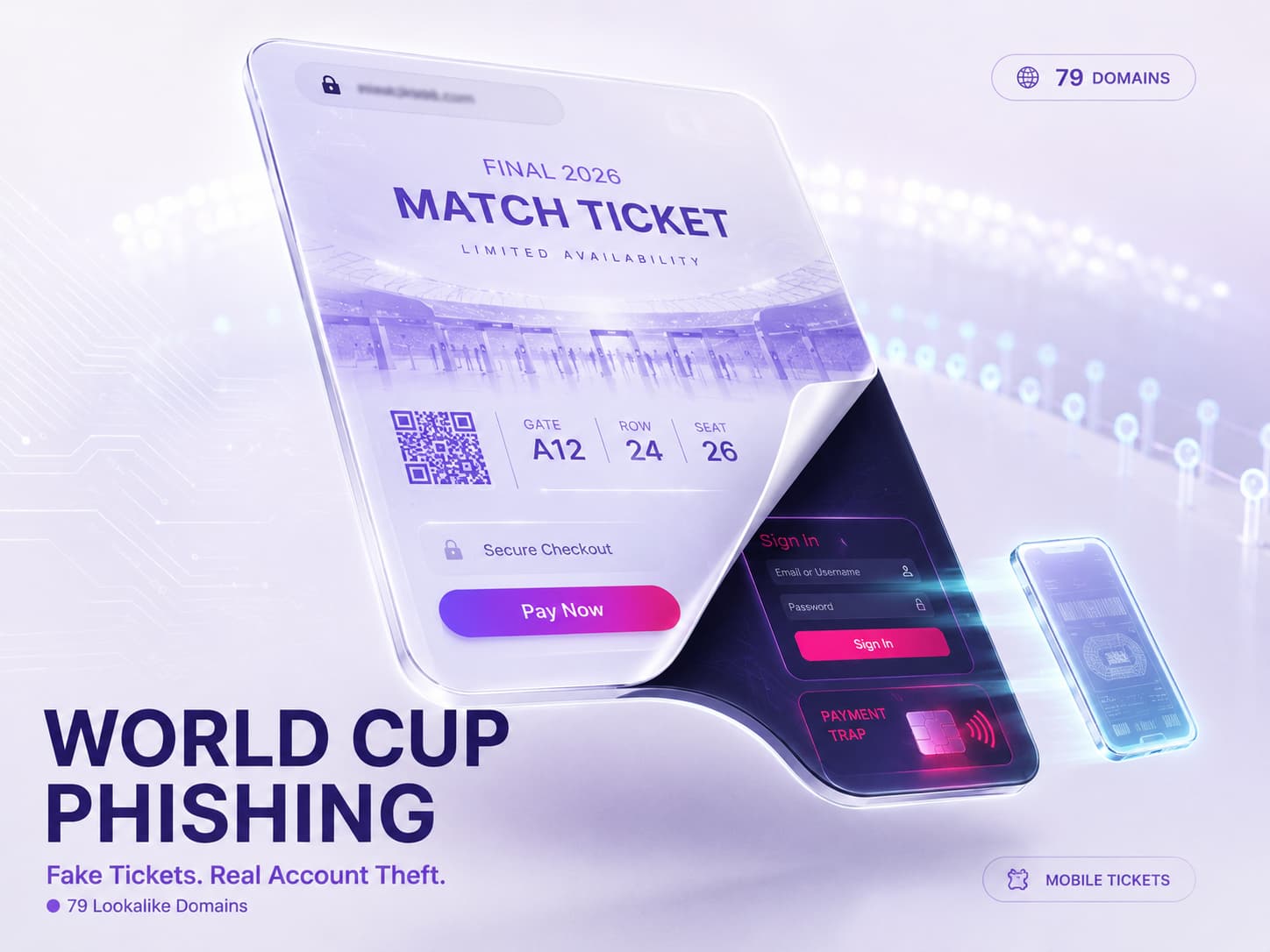
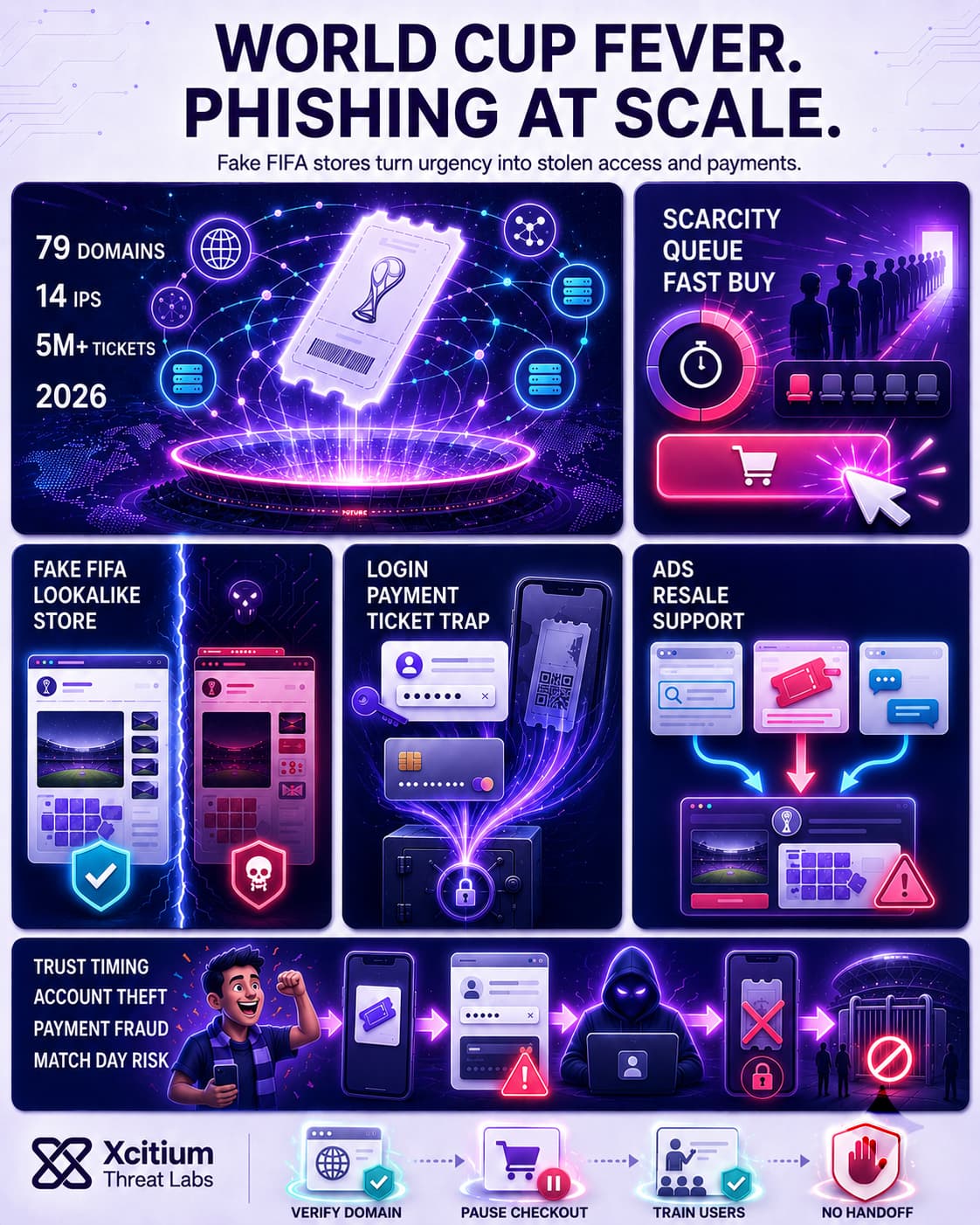
Researchers found at least 79 typosquatting and lookalike domains across 14 IP addresses. These fake sites were designed to imitate FIFA and steal credentials, payment details, or direct payments.
However, this is not a basic spam campaign. It is a polished fraud operation targeting fans who are searching for tickets, merchandise, and match information.
World Cup demand is giving scammers a perfect opening
The timing is not accidental. World Cup 2026 will be the biggest edition of the tournament so far. It will feature 48 teams and 104 matches across Canada, Mexico, and the United States.
Ticket demand is already high. By late April, official reporting stated that more than five million tickets had already been sold. Earlier, FIFA reported that more than 4.5 million fans entered the first ticket sales draw.
As a result, scarcity and urgency are part of the event long before kickoff. Fans know tickets are limited. Therefore, a fake site promising “instant access” or “limited stock” can feel believable to a stressed buyer.
In addition, tickets continue to be released during ongoing sales phases. Many are sold on a first-come, first-served basis, and fans may face digital queues during high-traffic periods.
That pressure gives scammers an advantage. A fake ticket page may not look suspicious at first. Instead, it can feel like a shortcut.
Fake FIFA stores now copy the full buyer journey
What makes this campaign stand out is its realism. The fake ticket websites copied page structure and HTML from legitimate sources. They also used genuine images and icons to make the storefronts look more convincing. In addition, some scam pages opened real tournament sections in a new browser tab. This tactic can lower suspicion and make the session feel authentic. As a result, these fake ticket websites look more like a full commerce ecosystem than a basic phishing page. They do not only ask for a login. Instead, they guide fans through a familiar shopping experience.
There are, however, a few warning signs that continue to carry weight:
- Low-level domain tactics, such as character replacement, added hyphens, or unusual endings, can remain hidden in plain sight.
- If a fake FIFA login page accepts bad credentials straight away, it means that the website is stealing credentials rather than authenticating them.
- Phishing ticket websites may skip the legitimate selection of seats and offer improbable availability for popular games.
- The checkout process may begin with a familiar payment card choice and then proceed to payment apps or cryptocurrencies, while the associated support chat is broken.
In addition, we found out that 45 out of 79 domains were registered by just one registrar, meaning automation and coordination. This is significant in the sense that the scalable infrastructure can grow very quickly in light of increased tournament demand. Put differently, the websites seen today may be only the beginning.
One bad click can lead to ticket theft, not just one fake order
The risk is bigger than losing money on fake merch. FIFA says all World Cup 2026 tickets will be delivered as mobile tickets through the official FWC2026 Mobile Tickets app, and screenshots or photos will not be accepted for stadium entry. Consequently, access to a fan’s FIFA-linked account becomes highly valuable. If attackers steal credentials, they may go after real digital tickets, not only new purchases.
FIFA also warns that tickets bought outside official channels carry risks including fraud, invalid tickets, and cancellation. Meanwhile, On Location says it is the only official hospitality provider, and ticket-inclusive hospitality packages are sold only through FIFA.com/hospitality and approved sales agents. That creates two attractive scam paths: sell fake inventory, or steal credentials that unlock real inventory.
Discovery is often the weakest link. The FTC says copycat World Cup sites are pushed through paid search results and social media, and it warns that paper tickets or screenshots are red flags. That advice matches a wider trend. In 2025, nearly 30% of people who reported losing money to a scam said it began on social media, with reported losses reaching $2.1 billion. In addition, shopping scams were the most reported type of social-media scam.
The smartest checks to make before match day
The practical approach is simple but takes discipline. The fans need slower clicks, while the brands need faster threat identification. However, both audiences benefit from following one approach: stick to official methods instead of convenient ones.
- Type the official URL directly and use the official resale marketplace at FIFA.com/tickets or FIFA.com/hospitality through On Location.
- Use two-factor authentication and a password manager. In case the autofill feature is not available or the login process seems to be in a rush, stop and verify.
- Consider screenshots, paper tickets, payments made exclusively through an app, and crypto-heavy checkout flows as red flags.
- Brands and sellers: Look for typosquatting sites, paid search placements, and counterfeit social media ads prior to traffic spikes.
- Organizers and partners: Improve the vendor access management process, implement segmentation of critical systems, and prepare takedown and support playbooks ahead of peak match hours.
Conclusion: When World Cup Excitement Becomes the Attack Surface
The 2026 FIFA World Cup is already creating the perfect conditions for phishing at scale. Scarcity, urgency, paid search ads, lookalike domains, and fake ticket stores give attackers exactly what they need, a motivated fan who wants to act fast.
This is not just fake merchandise fraud. With mobile tickets tied to digital accounts, stolen credentials can turn into stolen access, lost tickets, payment fraud, and account takeover before match day even begins.
Why This Threat Works So Well
World Cup phishing succeeds because it exploits trust and timing.
- Fans are actively searching for tickets, resale options, travel details, and hospitality packages
- Fake FIFA pages copy real branding, images, and buyer flows
- Paid search and social ads make malicious sites look legitimate
- Urgency lowers skepticism during high-demand sales windows
- Stolen credentials can expose real ticket inventory, not just fake purchases
When excitement overrides verification, the attacker wins.
Where Xcitium Changes the Outcome
For organizations using Xcitium Cyber Awareness Education and Phishing Simulation, these attacks lose their power at the human decision point.
- Users learn to question lookalike domains, urgent checkout flows, and fake login pages
- Simulated phishing builds pause and verify behavior before credentials are entered
- Suspicious ticket offers, payment requests, and fake support chats are challenged early
- The attack fails before the user hands over access, payment details, or account control
With Xcitium in place, World Cup phishing campaigns are far less likely to convert trust into compromise.
Protect Fans Before the First Match
Major sports events will always attract fraud because they combine emotion, money, and urgency. The best defense is not faster clicking, it is better verification.
Train users before the scam arrives.
Simulate the tactics attackers actually use.
Stop phishing before excitement becomes exposure.