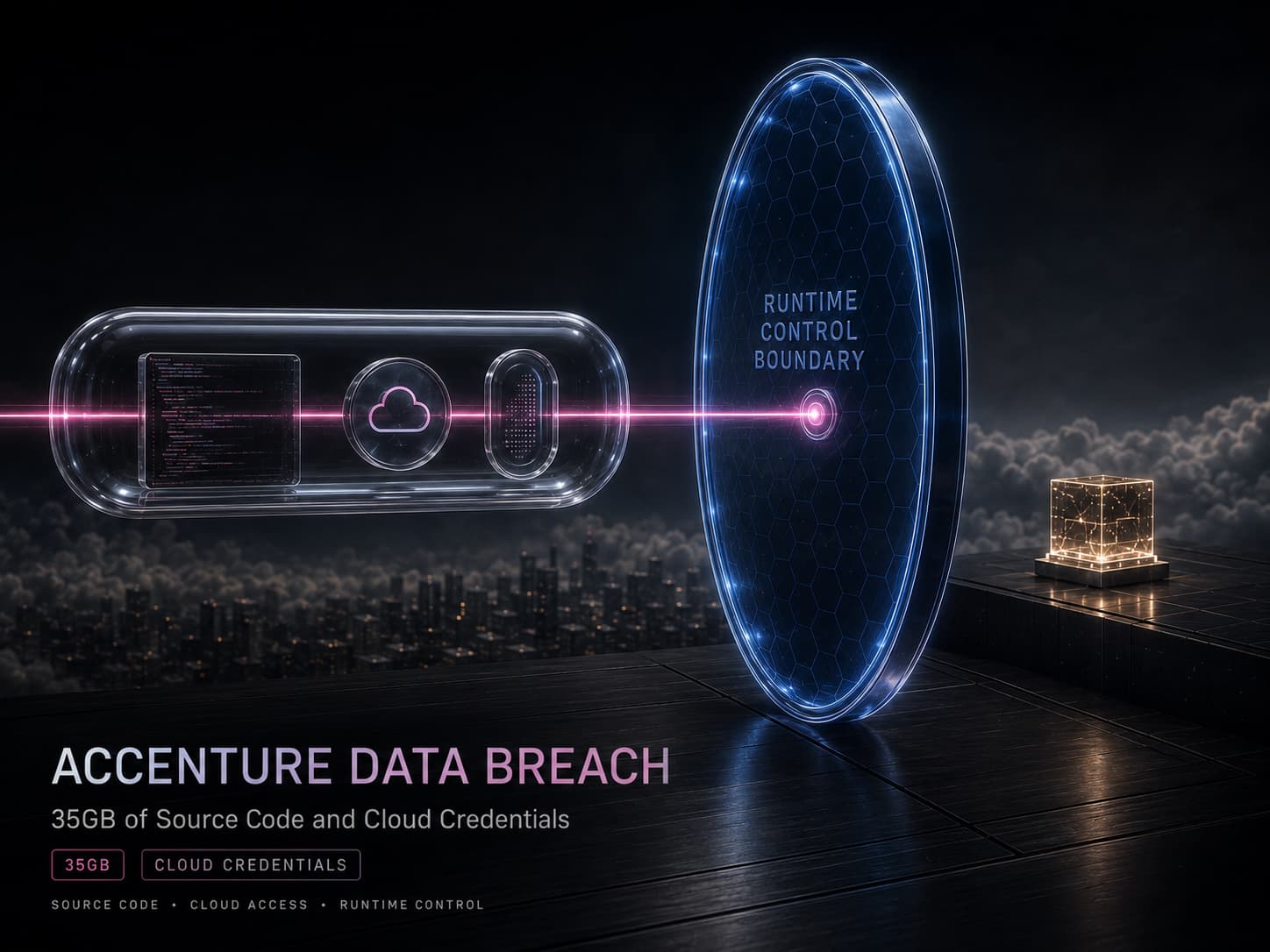
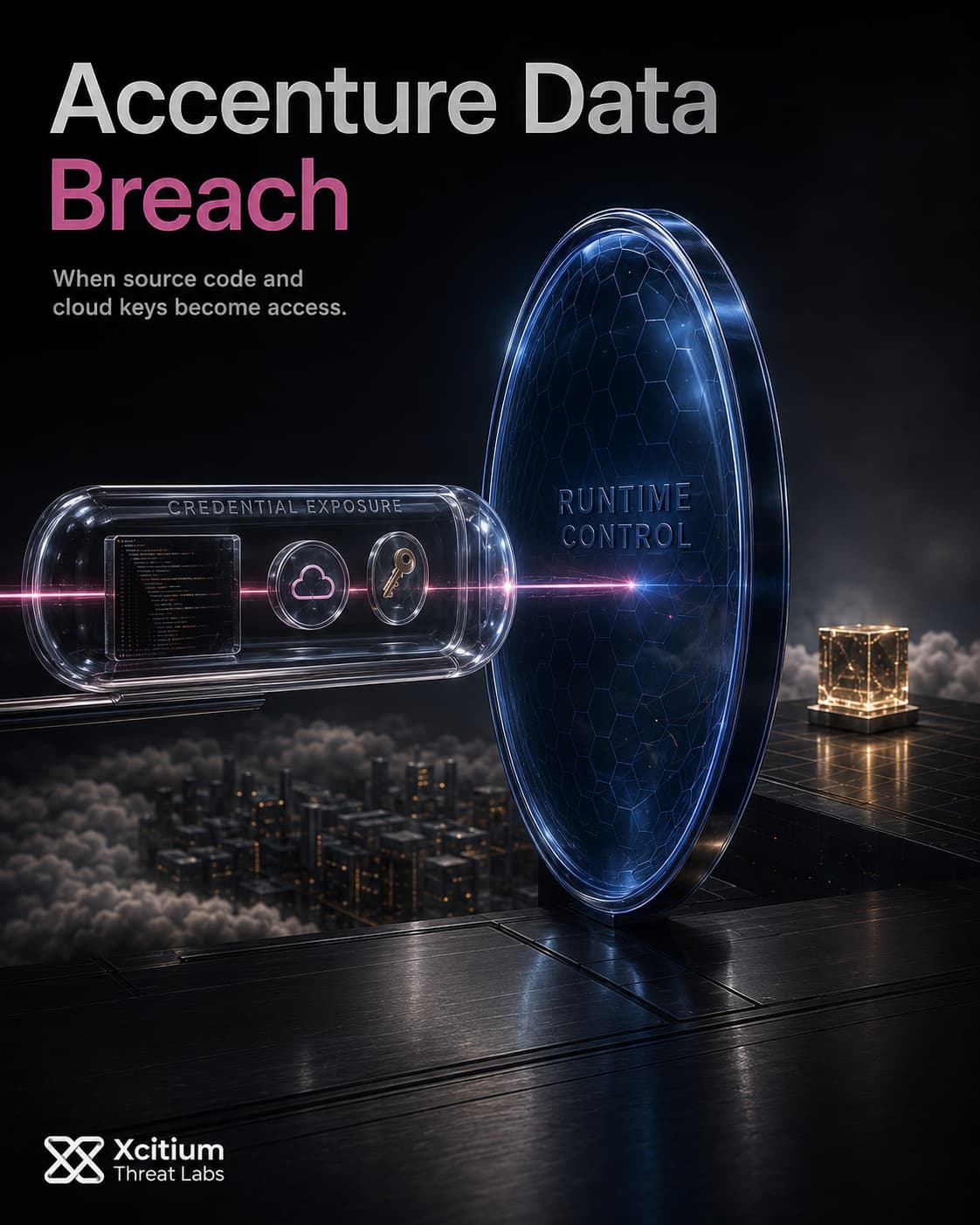
The Accenture data breach dominated security headlines recently, and for good reason. A threat actor calling themselves “888” claimed to have stolen roughly 35GB of internal data. Moreover, the timing could hardly have been worse for the consulting company.
What The Accenture Data Breach Actually Involved
In July 6, 2026, a user named “888” uploaded an advertisement for “Accenture Data Breach” at PwnForums, a popular cybercrime forum. The first line of the ad reads, “Today I am selling the Accenture Data Breach, thanks for reading and enjoy!” Based on the advertisement, the breach took place during the same period.
The contents of the breach go way beyond normal data. In particular, the advertisement includes:
- Proprietary source code (approximately 35GB)
- RSA private keys
- SSH private keys
- Azure Personal Access Tokens (PATs)
- Azure Storage access keys
- Internal configuration files
As opposed to usual leaking of email addresses, this set of information goes far deeper into the build pipelines and cloud infrastructure. Therefore, it is treated as a credential breach and not a mere data leak.
How Accenture Responded To The Claims
Accenture initially told it was “not aware of a cyberattack at the moment.” However, the company confirmed the incident the following day, on July 7. Its statement stayed deliberately narrow: “We are aware of this isolated matter, and we have remediated its source. There is no impact to Accenture operations and service delivery.“
Notably, the firm did not confirm the 35GB figure. Furthermore, it declined to describe the data types, explain how attackers got in, or say whether client data was touched. That silence leaves the real scope unclear, even as the company insists the access point is closed.
THE ACCENTURE BREACH
Alongside the source code, the listing includes RSA/SSH keys, Azure tokens, and config files, live credentials, not just code. Proof shots hint the leak may trace back to a developer’s machine, not just a hosted repo.
Accenture confirms an isolated, remediated incident, nothing more. Volume, data types, and client impact remain unverified. Sold one-time, in Monero.
- Recon: source code exposes internal logic to attackers offline.
- Live access: working keys/tokens authenticate directly, no exploit needed.
- Precedent: 2025’s F5/BRICKSTORM breach triggered a CISA emergency directive.
- Pattern: Accenture’s 3rd major incident since 2021’s LockBit ransomware claim.
Inside The Hacker’s Proof Screenshots
To build credibility, “888” shared proof of possession. One showed command-line activity against a “dev.azure.com” endpoint, followed by a git clone of a private repository named “121123_AtriasTalentAcademy,” hosted under a redacted accenture.com address. The captured output displayed project metadata, repository visibility flags, and remote Azure Repos URLs. Meanwhile, the clone streamed several thousand objects at high speed, which the seller presented as evidence of live access.
A second sample proved more revealing from a technical standpoint. Rather than raw code, it contained a directory tree mapping the structure of Accenture’s codebase. Within that tree, analysts spotted multiple references to .env files. These files never reach GitHub, since code uploads ignore them. Therefore, their appearance suggests the data may have come from a local developer machine rather than a hosted repository, which would raise the stakes considerably.
Why Source Code And Cloud Keys Are So Dangerous
The source code is a reconnaissance tool by itself because attackers can analyze it offline and find vulnerabilities which have not been fixed yet. When the source code is combined with actual access credentials, the damage multiplies quickly.
Actual encryption keys and tokens allow for authentication to the systems. This means that one leaked token can give an attacker more access than the source code. The F5 data breach is a good example of this. On October 2025, F5 announced that there had been an access by a nation-state actor to its network since at least August 2025 and that the source code of BIG-IP was stolen. The actor is suspected to be from China-nexus UNC5221 and uses BRICKSTORM backdoor. The US government’s CISA issued Emergency Directive 26-01 on the same day saying that “an imminent threat exists to federal networks”.
A Pattern Of Trouble For The Consulting Company
This is not Accenture’s first brush with attackers. In fact, the firm has stumbled repeatedly:
- In August 2021, LockBit 2.0 claimed to have stolen “over 6TB” and demanded a $50 million ransom, per intelligence firm Cyble, after Accenture identified the activity on July 30.
- In June 2024, “888” tried to sell data on 32,826 employees tied to the internal “Media Exchange” tool, though Accenture said the set “contained only three names and Accenture email addresses.”
The NATO Connection Adds Weight
The breach news broke at an awkward moment. On July 7, 2026, the very day Accenture confirmed the incident, the firm announced a major agreement with NATO. Accenture signed a contract with the NATO Communications and Information Agency (NCIA) for the Protected Business Network (PBN) program. Working alongside Italy’s Leonardo, Accenture will design and operate a secure multi-cloud platform for approximately 29,000 users across the Alliance.
Valued at an estimated 200 million euros (about $230 million) over seven years, the deal was signed by NCIA General Manager Dr Dylan Browne and Accenture EMEA Defense lead Olivier Girard at the NATO Summit Defense Industry Forum in Ankara. Given that responsibility, a leak of Accenture’s own source code and cloud credentials naturally invites scrutiny.
Verified Facts Versus Unproven Claims
At the end of the day, however, there is a difference between what was confirmed by Accenture and what was claimed by “888.” The corporation admitted that there was indeed an incident and that the source of the problem was secured. Nonetheless, the volume of stolen information, the types of credentials, as well as the effect on clients were not verified. The hacker made it clear that the archive is one-time-only and can be purchased using Monero.
Conclusion: When Source Code and Cloud Keys Become the Breach
The reported Accenture breach shows why modern data leaks are no longer measured only by record count. A claim of 35GB of source code is serious by itself. But when that source code is listed alongside SSH keys, RSA private keys, Azure tokens, storage keys, and internal configuration files, the incident becomes much more than a data leak.
It becomes a credential breach, a cloud access risk, and a software supply chain exposure at the same time.
Why This Threat Matters
Source code gives attackers visibility. Cloud keys give them access. Together, they create a much larger risk than either one alone.
- Source code can expose internal logic, APIs, workflows, and hidden assumptions
.envfiles can reveal secrets that should never leave local environments- Azure tokens and storage keys can allow direct access without exploiting a vulnerability
- SSH and RSA private keys can open paths into infrastructure
- Internal configs can help attackers map systems faster
- Leaked code can be studied offline to find future attack paths
Once code and keys leave the environment, the breach does not end when the access point is closed. The risk continues until every secret is rotated, every access path is reviewed, and every downstream dependency is validated.
Where Xcitium Changes the Outcome
This type of breach must be stopped at two points, before stolen credentials become access and before unknown activity on developer systems becomes exfiltration.
Xcitium ITDR strengthens the identity layer when exposed tokens, cloud keys, privileged accounts, or abnormal access patterns are used against business systems, developer platforms, or cloud environments.
Xcitium Advanced EDR, powered by Xcitium’s patented Zero-Dwell platform, applies Execution Governance on developer endpoints and managed systems when unknown tools, scripts, payloads, or data collection activity attempt to run.
Unknown code does not receive unrestricted execution rights.
Code can run without being able to cause damage.
Runtime behavior is governed before trust exists.
Secret harvesting, unauthorized repo access, suspicious scripting, and follow-on execution are stopped before impact.
Detection asks, “Did we recognize this activity as malicious?”
Execution Governance asks, “Could unknown execution turn developer access into data theft?”
That is the difference.
Close the Access. Govern the Execution.
The Accenture claim is a reminder that source code and cloud credentials can create long-lived risk even after an incident is remediated. Attackers can study the code, test exposed secrets, reuse access paths, and look for weaknesses long after the first breach window closes.
Rotate exposed credentials immediately.
Review developer endpoint activity.
Audit cloud tokens, storage keys, SSH keys, and repository access.
Govern unknown execution before developer trust becomes enterprise exposure.