The stories of Anthropic’s Mythos AI gaining access to some classified NSA systems as part of an authorized security audit have generated much buzz in the field of cybersecurity.
According to these reports, the model has managed to find and exploit security flaws in a matter of hours. Despite the controversy and dispute surrounding the story, the latter has become a subject of much interest and scrutiny by governments, cybersecurity experts, and tech leaders all around the world.
The case of NSA is not the only aspect of the story. It has become a part of an ongoing discussion on the impact that the development of artificial intelligence has on vulnerability studies, software security testing, and cyber operations, as well as regulation issues since reports have emerged about the connection between the NSA case and some new AI access limitations.
Understanding the Reported NSA Incident
The articles mention a security test using Mythos AI by Anthropic, which is a special AI system used for detecting software vulnerabilities and security problems.
According to the claims related to this test, the AI system managed to detect several vulnerabilities in the systems of NSA extremely quickly.
However, at the same time, Anthropic disputes some of the information about the event. Specifically, the company claims that the task of the AI system was mainly to analyze software and detect vulnerabilities, but not to perform a fully automated attack. The dispute about the details of what happened became one of the key elements of the story.
Regardless of how the truth will turn out, the case has revealed an important truth. Modern AI systems can do cybersecurity jobs that usually take much effort from humans.
THE MYTHOS INCIDENT
The articles describe a security test using Anthropic’s Mythos AI, a system built to detect software vulnerabilities and security problems. Per the claims, it identified several vulnerabilities in NSA systems extremely quickly.
Anthropic, however, disputes parts of the account — stating the model’s task was mainly to analyze software and detect vulnerabilities, not to carry out a fully automated attack. Regardless of how the details settle, the case reveals one truth: modern AI can now perform cybersecurity work that normally demands heavy human effort.
- Rapid detection: Mythos reportedly surfaced multiple vulnerabilities in NSA systems within hours.
- Disputed scope: Anthropic says the work was software analysis and vulnerability detection — not an end-to-end automated attack.
- Capability signal: highly capable AI can accelerate vulnerability discovery and large-scale analysis of critical software environments.
- Regulatory ripple: the case is now tied to discussions of new AI access limitations and export controls.
Growing National Security Concerns Around Advanced AI
One of the most remarkable things about the case is the response that came after the incident. There were talks about export controls, access restrictions, and governmental control over the technology of advanced AI. This is because of a growing view that highly capable AI can be used for purposes other than commercial and have some strategic value.
Usually, governments are concerned with regulation of encryption technologies, semiconductor fabrication equipment, telecom infrastructure, and advanced computing devices.
In addition, now the AI model itself becomes a subject for these regulations.
From the viewpoint of national security, the primary issue related to the advanced AI system is that it can speed up vulnerability discovery, automate parts of security research, and conduct large-scale analysis of critical software environments.
Therefore, the future regulations will cover not only development but also usage and access to the AI model.
Cybersecurity Industry Is Approaching A New Stage
Previously, companies have invested in improving their detection and response mechanisms through automation. Nowadays, AI is starting to penetrate the realms that were typical for security research, software assurance, and vulnerability analysis.
It could change the way security professionals work in the near future.
It is vital to note that the main idea behind the Mythos discussion is not the fact of success of a certain AI solution during a particular test. It is about the emergence of a new trend when AI tools get more involved in the cybersecurity industry.
In the nearest future, companies will have to deal with the issue of integrating innovation and controlling the risks. It is not a question of AI’s ability to affect cybersecurity anymore. It is a matter of how security professionals should deal with the fact that AI is changing the industry.
Conclusion: When AI Compresses the Time Between Discovery and Attack
The reported NSA and Mythos AI case shows why cybersecurity is entering a new stage. The issue is not only whether AI can help defenders find vulnerabilities faster. The bigger question is what happens when the same speed reaches attackers, exploit developers, and state-level operators.
AI can accelerate vulnerability discovery.
AI can shorten exploit development cycles.
AI can reduce the time defenders have to react.
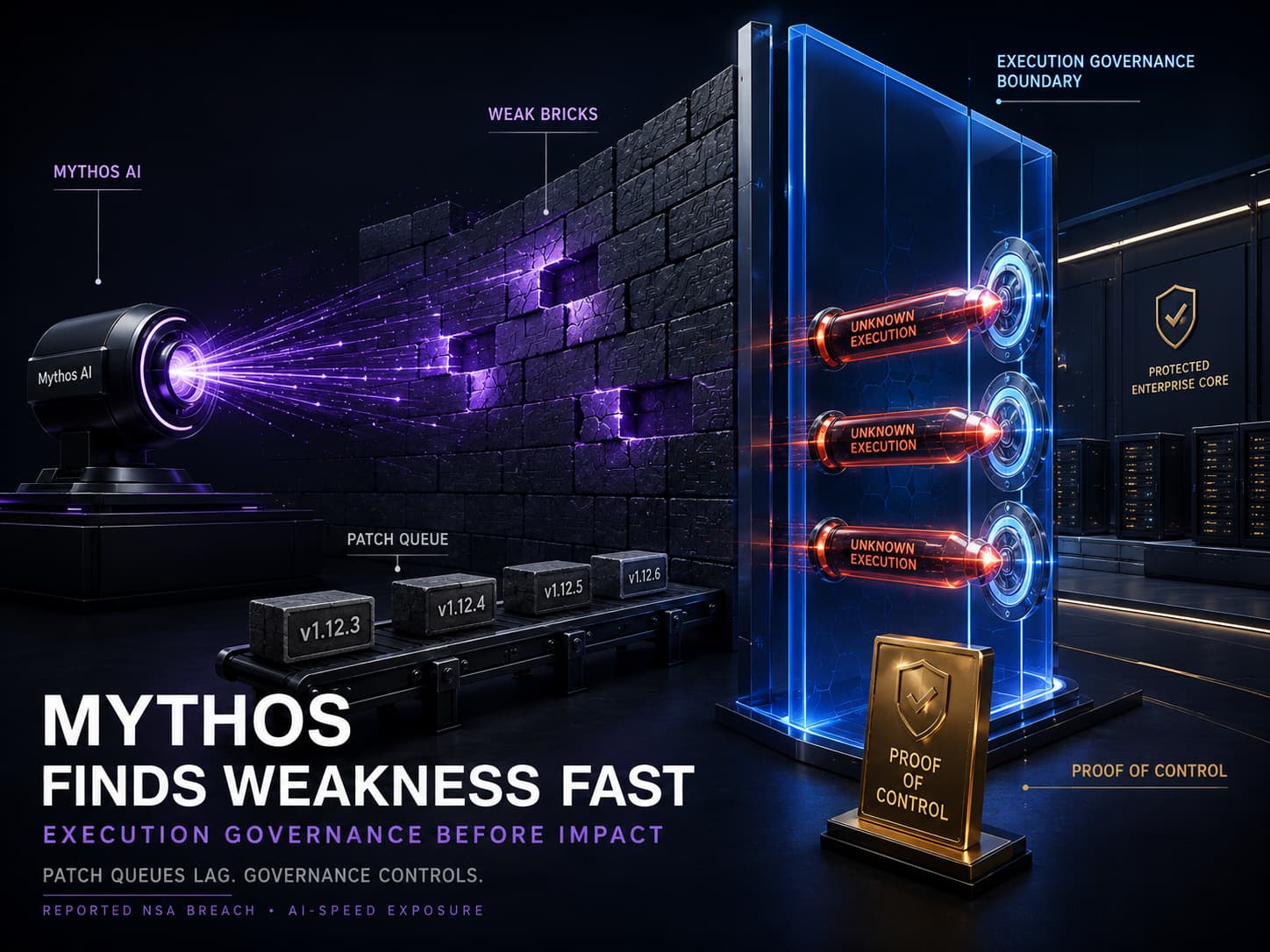
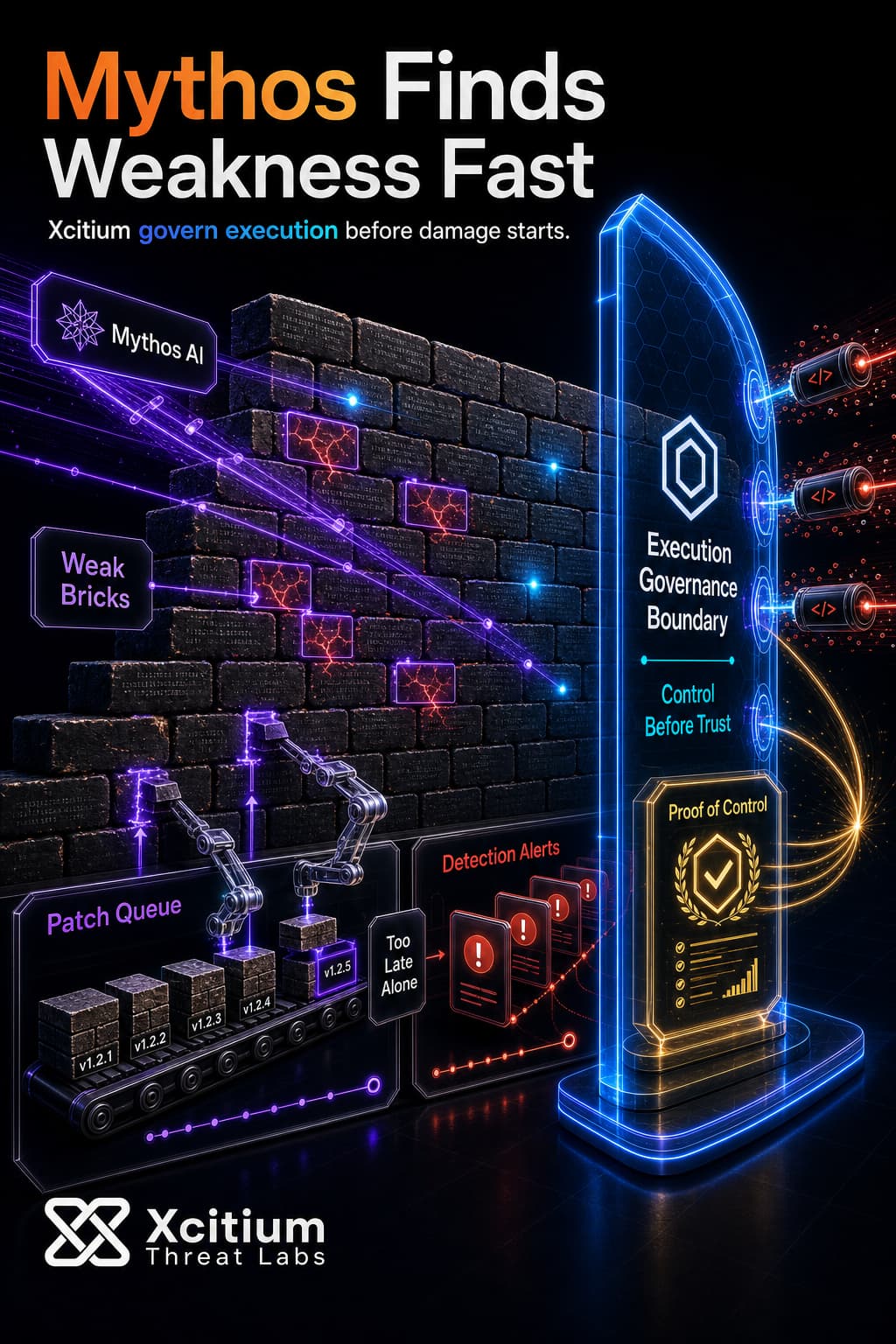
That changes the security model. Patching still matters, but patching alone is no longer enough when discovery and exploitation move at machine speed.
Why This Threat Matters
AI-driven security research creates a new pressure point for CISOs, MSPs, and MSSPs. The exposure window is shrinking, while the need to prove control is increasing.
- Unknown vulnerabilities may be discovered faster
- Exploit paths may be tested and refined more quickly
- Security teams may have less time between discovery and active abuse
- Detection-first tools can be tested, bypassed, and retried at scale
- MSPs and MSSPs must protect many customer environments under the same accelerated threat cycle
- Boards, customers, auditors, and insurers will expect proof that controls operated before impact
This is not only a speed problem. It is a proof problem.
Where Xcitium Changes the Outcome
Xcitium changes the model from detection-first response to Execution Governance.
When AI-speed threats move from discovery to execution, unknown code does not receive unrestricted execution rights. Code can run without being able to cause damage. Runtime behavior is governed before trust exists.
That is the difference.
Detection asks, “Did we recognize this as malicious?”
Execution Governance asks, “Could unknown code cause damage at all?”
For CISOs, this creates a stronger control narrative.
For MSPs and MSSPs, it creates a stronger customer outcome.
For auditors and insurers, it creates proof that execution controls operated.
AI Changes Speed. Xcitium Changes Outcome.
AI will make cyber operations faster on both sides. Defenders will use it to find weaknesses. Attackers will use it to test, adapt, and exploit faster.
The answer is not more alerts.
The answer is enforceable runtime control.
Govern unknown execution before trust exists.
Prevent discovery from becoming damage.
Prove control before impact.
Choose Xcitium’s patented Zero-Dwell platform to govern unknown execution before trust exists.