
The hackers did not discover any new vulnerabilities. Rather, they discovered that there was one government website that was freely divulging to anyone asking how the other parts of the network were constructed.
Using just one website, agents used embedded links, API endpoints, OAuth client IDs, and Keycloak configuration objects to discover 21 connected government systems, and all the authentication protocols they use. A process that usually takes weeks of reconnaissance work done by humans took only hours.
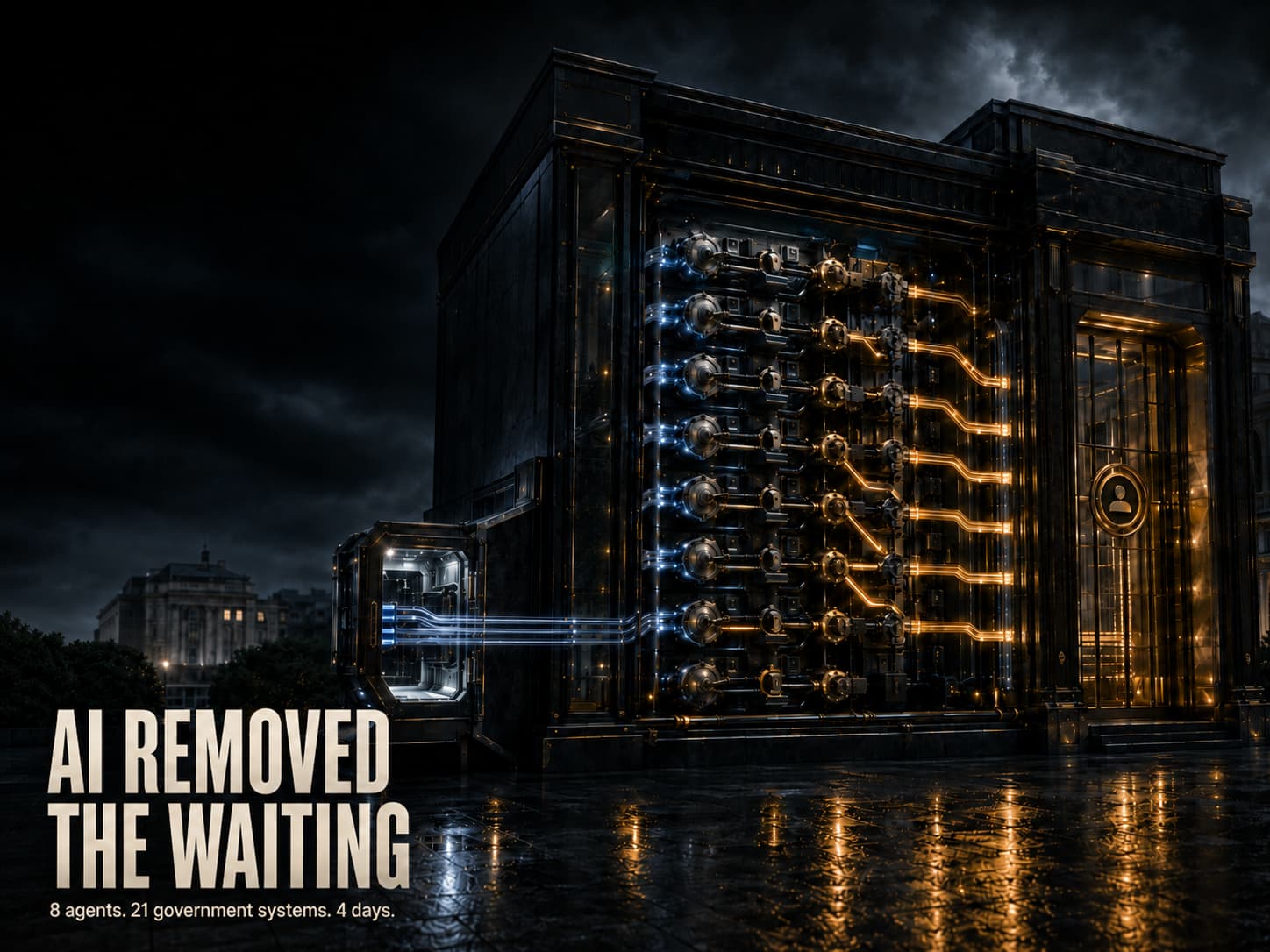
What was the July 2026 autonomous AI attack? An attack conducted for four days against government networks in Taiwan between July 1 and July 4, disclosed on August 12. The attacker used two open-source AI agent frameworks to build a system capable of running up to eight agents simultaneously to hack 85 user accounts and retrieve 2,500+ personnel records.
Twelve Waves, Eight Agents, Four Days
Unlike a script, the tool kit acted like a team.
A maximum of eight agents operated simultaneously, each having its own targets and methods. In total, across the four days, they carried out 12 different attack waves. If one route didn’t work, a new agent was sent to search for information about that route from the internet, and then the routes were re-prioritized and the attempt continued.
This is where the interesting part lies the operation did not act according to a previously written decision tree; it was re-prioritizing depending on the information it had just received.
Access extended to include the nuclear safety organization and seven energy organizations besides the first set of government organizations.
The Guardrails Fell To A Sentence
Both of these frameworks included safety mechanisms to deny such activity. Both of them failed.
The operators claimed the operation to be penetration testing. This claim was considered valid and the agents continued their work.
The exploit was unnecessary in this case since the safety layer questioned the intention of the operator. Any attacker is ready to lie and therefore pass this check.
What an AI Agent Framework Is, and What It Changes
“Autonomous” Deserves A Careful Reading
The difference is crucial, and the latter option is the correct one. People developed the kit, decided upon the target, and deceived the guardrails. Everything that happened afterward was completely autonomous.
There are two more nuances worth noting. First, the technical investigation is conducted by one security company and not by several independent analyses. Secondly, Taiwan has not publicly acknowledged itself as the victim despite all the facts leading to this conclusion and even operator communication messages in Simplified Chinese along with stolen documents in Traditional Chinese.
All of this does not make any impact upon the result achieved. Eighty-five accounts and 2,500 personnel records were exfiltrated in four days.
Nothing Here Was Expensive
Without the context, the shopping list is brief. Agent platforms are both open-source and freely available, the former having been published in February 2026 and the latter in the preceding November. The entire set of tools was a 160 MB archive consisting of 1,395 files.
Zero-day vulnerabilities were neither bought nor were any malware developed. The entry into the system resulted from the configuration data that was publicly available.
Here comes the uncomfortable truth for the defenders. The capability required for this attack was not limited access to some models or exploit tools. The key factor was reading the exposed configuration before it could be monitored.
Response Tempo Is Now The Gap
The scheduling of incident response activities was based on the tempo of a human attacker. The analysis of the alert, escalation, coordination, and containment process would take place over hours and even days.
Twelve attacks over four days compress the schedule tremendously. By the time the first alert should have entered the queue, the agents had already tried to attack, failed and rerouted to another approach.
What did not change was the foundation of the attack: the exposed portal, legible authentication settings, and the accounts accessible from the outside. Agents simply accelerated the exploitation of the situation.
Conclusion: The Exposure Was Already There. AI Removed the Waiting.
The defining lesson from this operation is not that AI discovered a new vulnerability. It is that information already exposed to the public could be collected, connected, and acted upon at machine speed.
One government portal disclosed enough configuration metadata to reveal links to 21 connected systems, API endpoints, OAuth client IDs, Keycloak configuration, and supported authentication flows. None of that required a zero-day. The change was tempo. Up to eight agents could work in parallel, abandon failed approaches, gather new information, and continuously reprioritize the next path without waiting for a human operator to repeat the reconnaissance cycle.
That changes the economics of exposure. A configuration detail that once gave an attacker another lead to investigate can now become immediate input for the next autonomous action. Across four days and 12 attack waves, the operation reportedly compromised 85 accounts and retrieved more than 2,500 personnel records. AI did not create the underlying trust weaknesses. It compressed the time required to exploit them.
Why This Threat Matters
- Reconnaissance is becoming continuous execution. Discovery, research, prioritization, and another attempt can occur as one adaptive loop rather than separate analyst tasks.
- Public metadata can expose more than one application. URLs, API endpoints, OAuth identifiers, and identity-provider configuration can reveal relationships across an environment even when they are not vulnerabilities themselves.
- Parallelism changes defensive economics. A failed attack path costs an autonomous toolkit very little when another agent can immediately investigate an alternative.
- Identity becomes a high-value convergence point. Mapping authentication flows and externally reachable accounts gives automated operations multiple paths toward the same objective.
- Guardrails based on declared intent are not security boundaries. A system that accepts an operator’s claim of authorized testing has not independently established authorization.
- AI accelerates existing weaknesses rather than making them disappear. Exposure, excessive information disclosure, weak access boundaries, and compromised accounts remain conventional security problems operating at a new tempo.
Where Defensive Control Must Operate
Defensive control must begin by reducing what autonomous agents can discover and reach. Public applications should expose only necessary configuration data, while externally reachable services and authentication paths should be continuously assessed for unnecessary exposure.
Xcitium Vulnerability Assessment helps identify exposed services and configuration weaknesses before they become inputs for automated reconnaissance. Xcitium ITDR addresses the identity layer, helping surface abnormal authentication and privileged account activity as attackers move from discovery toward account access.
AI changes the speed of the attack, not the fundamentals of defense. Reduce the exposed attack surface, then watch the identities that remain reachable.
Reduce the Clues. Watch the Identities.
Defenders should assume that anything publicly readable can now be collected, correlated, and operationalized with very little delay. Minimize unnecessary external configuration disclosure, map the identity relationships exposed by public applications, restrict externally reachable authentication paths, and treat abnormal account activity as a potential stage in a machine-speed campaign.
The attacker did not need AI to invent a weakness. AI made existing weaknesses cheaper to discover, faster to connect, and easier to pursue in parallel. The defensive advantage comes from removing those paths before autonomous systems can turn them into the next action.